

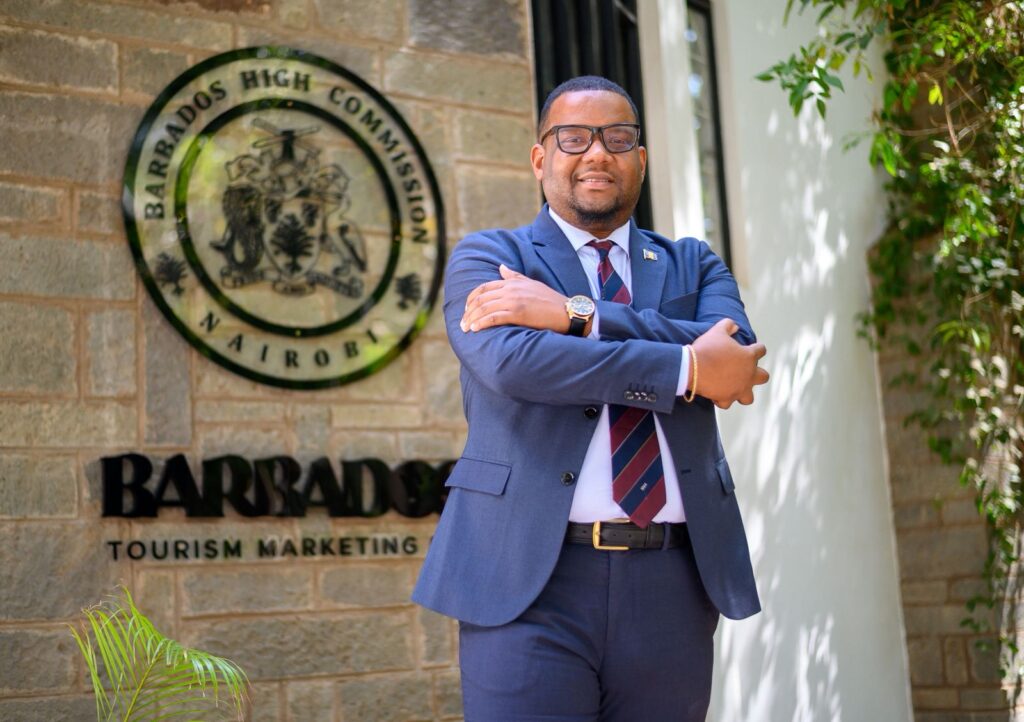
Kyle Gittens is the Director of Emerging Markets for the Middle East and Africa (MEA) at
Barbados Tourism Marketing Inc. (BTMI). With the recent opening of a regional office in
Nairobi, Kenya, Barbados is making a strategic bet on Africa and the GCC as high-
potential source markets. We spoke to Gittens about the strategy behind the move, the
opportunities he sees across the continent, and why Barbados is more than just a
beach destination.
Why Nairobi? What inspired Barbados to open an office there to serve Africa and
the Middle East?
From a tourism perspective, we’ve seen tremendous growth from the African market
over the past two to three years, and by extension from the GCC, which also falls under
my remit. As a statutory corporation, we operate in markets where Barbados has
diplomatic representation, so Nairobi was a natural choice given the presence of our
High Commission.
Beyond that, Nairobi makes geographic and commercial sense. It has strong
connectivity to South Africa, currently one of our largest African source markets, as well
as direct links to West Africa and the Middle East. Being based here allows us to
efficiently serve multiple markets from one hub.
What do African travellers typically seek in Barbados?
It’s a range of motivations. Barbados is known as the culinary capital of the Caribbean,
so food is a major draw. Visitors want to immerse themselves in culture, heritage, and
local experiences. Our calendar of events is vibrant year-round, from music festivals to
sporting events to our annual Crop Over carnival.
Of course, there are the beaches but we’re much more than that. Travelers from Kenya
and other African markets often default to the Middle East for holidays. By opening up
the Caribbean as an alternative, we’re offering something fresh: a culturally rich island
with deep history and a welcoming atmosphere.


What strategies are Barbados using to grow arrivals from Africa?
We’re taking a 360-degree approach. That includes digital and out-of-home advertising,
strong media engagement, and strategic partnerships with tour operator societies and
travel agent associations. We are formalising memberships within these groups to
ensure direct engagement with the trade.
We’re also introducing the Barbados Elite Club, our training and incentive program for
travel agents. It equips them with destination knowledge and rewards them for bookings. Additionally, we plan to host travel agents and media in Barbados so they can
experience the island firsthand.
Q: As Barbados looks to expand its tourism presence in Africa, what key challenges are you facing from market awareness and connectivity to visas and competition with established destinations?
Connectivity is the main hurdle. Barbados is visa-free for most African travelers, which
is a major advantage. However, there is currently no direct airlift from Africa, meaning
travelers often require transit visas through the UK or U.S., something beyond our
control.
We are in early-stage discussions with carriers about improving connectivity. We know
it’s possible. In 2024, charter services from Accra and Lagos operated successfully for
major events. Direct routes would reduce travel time and eliminate transit visa
requirements, significantly improving access.

What does success look like for you in this role?
Year-on-year growth in arrivals and increased visitor spend on island. In 2025,
Barbados welcomed 3,276 visitors from Africa, representing a 45.9% increase over
2024, an additional 1,031 visitors.
Nigeria led with 971 visitors (up 81.8%), followed by South Africa with 766 visitors.
Ghana accounted for 11.1% of arrivals, while Kenya contributed 180 visitors up 16%
year over year. Kenya is still emerging, but it holds strong potential.
Beyond numbers, success would also mean establishing direct air services from Africa
and the Middle East.
Barbados is often seen as a beach destination. How are you diversifying that
perception?
Beaches are part of our appeal, but culture and heritage are what truly differentiate us.
Bridgetown, our capital, is a UNESCO World Heritage Site. We have the oldest
parliament in the Western Hemisphere and one of the oldest synagogues in the
Americas.
We’re also leveraging sports tourism, golf, and events like the Run Barbados Marathon
Series. Culinary tourism is another pillar. Through initiatives like “Dine with a Bajan,”
visitors can enjoy home-cooked meals in Barbadian households, offering authentic
cultural immersion.
Tell us about your journey into tourism.
I started at 16 intending to become a chef. When I didn’t meet the prerequisites for
culinary school, I pursued tourism and travel instead. Along the way, I discovered a
passion for marketing and business development.
An internship at the former Barbados Tourism Authority turned into a 17-year career.
I’ve worked in research, aviation, and overseas postings in London, New York, and
Panama before taking on this role covering Africa and the Middle East.
What excites me most about Africa is that it’s new territory. There’s no blueprint. I get to
combine research and strategy to shape a market from the ground up.

Any final message for African travelers?
Barbados sees Africa as more than a tourism market. There are opportunities for trade,
investment, and cultural exchange. Tourism is the entry point but the relationship can
extend far beyond that.
For African travelers seeking something different, rich culture, history, cuisine, sport,
and warm hospitality, Barbados is ready to welcome you.
