

As the world marks International Women’s Day, conversations about gender equality
often focus on employment, education and leadership. In many Indigenous
communities, land is the foundation of pastoral livelihoods, food security and cultural
continuity. Yet for generations, cultural traditions and patriarchal inheritance systems
have largely excluded women from owning or inheriting land. The result is that many
Indigenous women spend their lives working land they do not legally control, raising
families and managing resources without formal rights to the very territories that
sustain them.
Kenya’s legal framework appears progressive on paper. The Constitution of Kenya
guarantees equal property rights for men and women, while the Community Land Act
requires inclusive governance of community land. However, in many rural and
pastoralist regions, customary practices still shape everyday reality. Land ownership
remains overwhelmingly registered in men’s names, while women typically access land
through fathers, husbands or male relatives.
For Indigenous communities, land is not simply a private asset but a communal
resource tied to lineage and clan identity. Traditionally, land passes through male heirs
to ensure it remains within the clan. Women, who usually marry into other families, are
expected to access land through their husbands’ homesteads rather than inherit it
themselves. While this system historically reinforced communal cohesion, it has also
limited women’s authority in land governance.

“Women work closely with the land, caring for livestock, collecting water and supporting
household food systems, but they rarely have formal ownership or authority to make
decisions about land,” says Semeyan Hillary Lenantoiye, founder of the Inclusive
Culture Action Network (ICAN) and Miss Climate Kenya (2025–2027). “This creates a
situation where women depend on land for survival yet have little control over how it is
used or managed.”
Without land titles, many women cannot access credit, invest in livelihoods or build
long-term financial security. Widows and divorced women often face eviction or land
grabbing, while families can be displaced when land is sold without women’s consent.
Research highlights the scale of the disparity. Fewer than 15 percent of women in Kenya
own land individually, while less than seven percent of land titles are registered solely in
women’s names. Even when women jointly own land with spouses, decision-making
power frequently remains dominated by men.
“When women lack secure land rights, their ability to support family welfare is
weakened. Migration, shrinking grazing areas and land fragmentation can disrupt
children’s education and reduce food security,” notes Lenantoiye.
Environmental sustainability is also affected. Indigenous women are often the daily
managers of natural resources, closely monitoring pasture conditions, water availability
and household food production. Yet they are frequently excluded from formal decision-
making spaces where land use and conservation strategies are determined.
“When women participate in environmental leadership, conservation programs often
become more practical, inclusive and sustainable,” Lenantoiye explains. “Their
knowledge of the land comes from daily lived experience.”
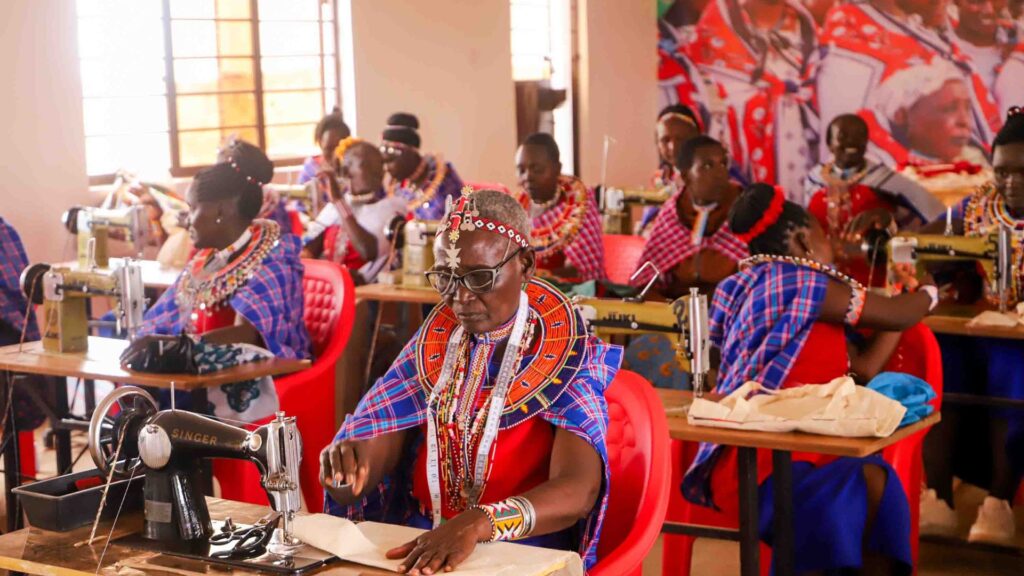
In Kajiado County, these challenges are particularly visible among Maasai communities
where land subdivision and development have intensified in recent years. Expanding
infrastructure, industrial activity and land sales have reduced traditional grazing areas,
increasing pressure on pastoral livelihoods.
According to Semerian Sankori, founder and executive director of Patinaai Osim, a
community-based organisation working with Maasai women, the gap between legal
rights and customary practices has become more pronounced over the past decade.
“For generations, Maasai women have sustained the land without owning it,” Sankori
says. “They manage livestock, water, food and families, yet decisions about inheritance,
subdivision and sale have largely remained in male hands.”
Climate shocks have further complicated the situation. Severe droughts between 2020
and 2023 weakened pastoral livelihoods across southern Kenya, exposing the
vulnerability of communities whose land access remains insecure. Grassroots
organizations are now working to bridge the gap between statutory rights and cultural
practice.
Patinaai Osim focuses on strengthening Maasai women’s land rights through legal
awareness, leadership training and economic empowerment. The organization trains
women on inheritance laws, spousal consent requirements and land governance
procedures, helping them translate constitutional rights into practical knowledge.
One of its key strategies involves training community paralegals, both women and men,
to mediate land disputes, guide documentation processes and support widows facing
dispossession. These local advocates help bridge statutory law and customary systems
from within the community.

The organization also engages elders and clan leaders through dialogue rather than
confrontation. By framing women’s inclusion as a way to strengthen family resilience
and reduce conflict, Patinaai Osim has gradually fostered shifts in community attitudes.
Economic empowerment forms another pillar of the work.
“Through vocational training, entrepreneurship support and leadership development,
women gain financial independence and confidence to participate in governance
spaces,” says Sankori.
In northern Kenya, ICAN is pursuing similar efforts among Samburu communities. The
organization supports women and youth through savings groups, financial literacy
programmes and small business development, helping women generate income even
when land ownership remains out of reach.
“Many Samburu women participate in self-help groups that function as informal
community banks,” Lenantoiye says. “Members save money collectively and access
small loans to invest in beadwork production, livestock trading, retail businesses and
food production.”
These savings groups provide women with a pathway to financial independence and
resilience, particularly in regions heavily affected by climate change.
ICAN also works to expand markets for women’s products. Many Samburu women
produce intricate beadwork and other handmade goods, but historically they have sold
only within local villages. By connecting women with exhibitions, buyers and wider
markets, the organization helps increase their income and economic confidence.
However, advocates say economic empowerment alone cannot solve the deeper
structural challenge of land ownership.
Elizabeth Masikonte, a community land specialist with the organization IMPACT Kenya,
notes that women’s land rights remain a critical issue in pastoralist communities.
“In many indigenous communities, land has traditionally been governed through
customary systems where men hold primary ownership and inheritance rights,” she
explains. “Women typically accessed land through fathers, husbands or male relatives
rather than owning it directly.”
While legal frameworks have introduced stronger protections, progress has been
gradual. Awareness campaigns and advocacy have encouraged greater acceptance of
women’s participation in land governance, including representation in Community Land
Management Committees. Still, cultural barriers persist.
“When women are excluded from land ownership, it affects not only the women
themselves but also their families and communities,” Masikonte says. “Without secure
land rights, women lack economic security and the collateral needed to access credit or
invest in livelihoods.”
She adds that secure land tenure can strengthen food security, environmental
stewardship and community resilience especially in pastoral regions where climate
change is intensifying drought cycles.
