

From Corporate Law to Continental Roads: How Wendy Sarah Okanda Is
Rewriting the African Travel Story
By day, Wendy Sarah Okanda is a corporate and commercial lawyer working in-house at
a multinational firm. By night, and often by weekend, she is plotting road routes across
borders, calculating visa timelines and convincing young Africans that the continent is
not a place to escape from, but one to explore.


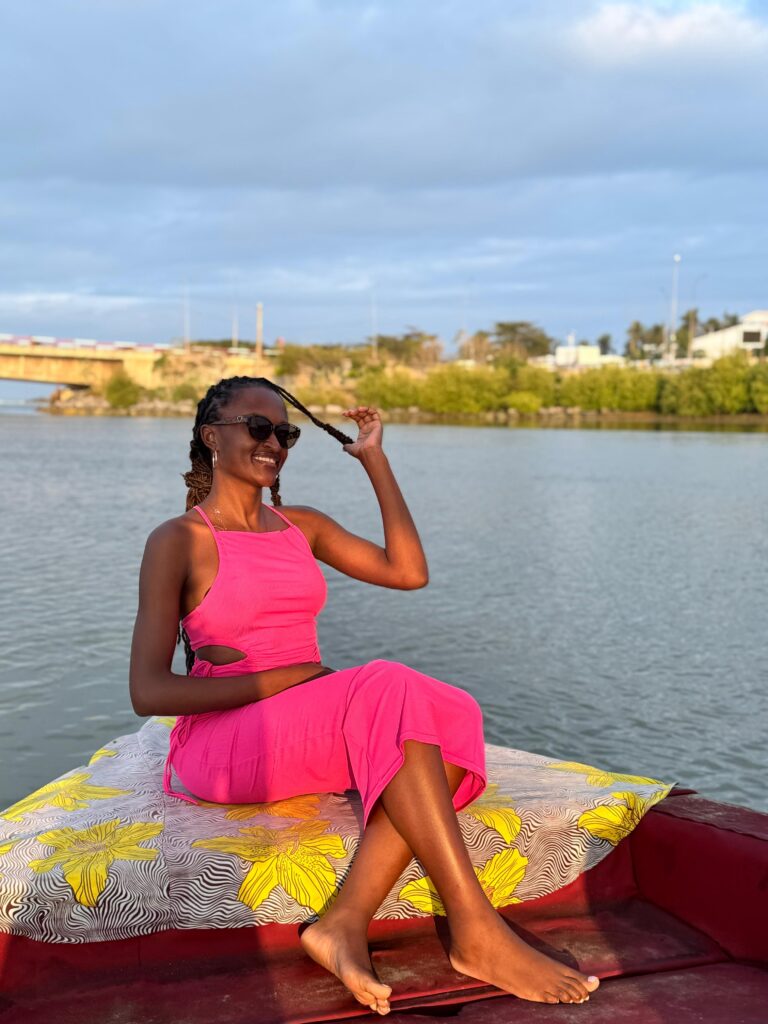
Online, many know her as “The Roaming Sarai.” In business circles, she is the founder
of Afro travelling Agency Limited, a company she launched at just 22 to make intra-
African travel more structured, affordable and community-driven.
But her story begins long before overland trucks and border stamps.
“I always say I decided to become a lawyer in Class Three,” she laughs, recalling her days
at Makini School in Nairobi. Her best friend’s father was a lawyer who picked his
daughter up in sharp suits, a detail that left a lasting impression on a young Wendy.
“To my young mind, that was success.” Birthday parties where each child received their
own chocolate sealed the deal.
As she grew older, the ambition matured from childhood admiration into a desire for
impact. By the time she was choosing her career path, she knew she wanted corporate
and commercial law. Today, she sometimes pauses to reflect. “Not many people get to
say they are living their childhood dream. I do.”
Yet even as she built her legal career, another journey was unfolding.
The Road to Abuja
Travel, for Okanda, began modestly. Family holidays meant long drives from Nairobi to
Busia, up to 13 hours on the road depending on traffic. “It was long, but I loved those
trips,” she says.


International exposure came at 15, when her father relocated to Abuja, Nigeria for work.
Suddenly, West Africa became part of her teenage reality.
“At first I struggled,” she recalls. The accents were different, she didn’t understand
pidgin, and the food and pace of life felt unfamiliar. But slowly, the discomfort
transformed into curiosity. “Nigeria was vibrant, ambitious and full of life. The people
were warm and welcoming.”
Living there challenged stereotypes she had unconsciously absorbed.
“For the first time, I realized how limited our understanding of other African countries
can be.”
She began watching African travel documentaries and imagining herself exploring
beyond Kenya’s borders. Her father, who had travelled widely for work, reinforced the
value of exposure. “He believed that seeing the world changes how you think. I started to
believe that too.”
At university, she joined AIESEC in Kenya, a global student-led organization focused on
cross-cultural exchange. Conferences and leadership roles took her to multiple
countries, expanding her network and worldview. Since then, she has travelled across
East, West and Southern Africa.
Each trip reinforced one conviction: “Africa is not lacking in beauty. Sometimes we
simply lack exposure and access.”
The Five-Day Bus Ride That Changed Everything
The idea that travel could become more than a hobby came unexpectedly.
After completing her fourth year at university, Okanda attended an AIESEC conference
in South Africa. While researching budgets, she discovered it was possible to travel from
Nairobi to Johannesburg entirely by road.


“The idea felt bold and slightly unrealistic but exciting,” she says.
At 22, she and her friend Tess boarded buses from Nairobi to Dar es Salaam, then
Lusaka, Gaborone and finally Johannesburg, a five-day journey across multiple borders.
Her parents were anxious but supportive. “My dad would call at every stop, calculating
the hours to the next destination,” she says. “In many ways, he travelled that road with
me.”
The experience transformed her perception of the continent. They interacted with
border officials, bus conductors, street vendors and strangers who extended unexpected
kindness.
When she shared the journey online, the response surprised her. “People were curious.
Many said they had always wanted to explore Africa but didn’t know where to start.”
She identified a gap: young Africans wanted safe, structured and affordable intra-
continental travel options.
In December 2023, she organized her first overland group trip from Nairobi to
Johannesburg. Sixteen participants travelled together in an overland truck.
“It was terrifying,” she admits. Coordinating logistics across borders, ensuring safety
and managing personalities required meticulous planning. But watching participants
experience the same shift in perspective made it worthwhile.
“That’s when I knew this was bigger than just me travelling.”
Challenging Stereotypes
Okanda says one of the biggest misconceptions about Africa is development.
“Many African countries are far more structured and developed than we are led to
believe,” she says. Ivory Coast, in particular, stunned her with its infrastructure,


organized public transport and modern cityscape. Color-coded taxi systems made
navigation efficient and practical.
Cape Town offered a different lens, functional systems and striking beauty, alongside
visible inequality. “It made me observe the country analytically, not just as a tourist.”
Safety is another myth she believes is overstated. “With proper planning and awareness,
it can be just as safe as travelling anywhere else in the world.”
She recalls a bus ride from Ivory Coast to Ghana where language barriers nearly derailed
her stop at Cape Coast. Fellow passengers who spoke French advocated for her with the
driver and shared their food along the way. “At some point I thought, ‘These people are
now more concerned about my destination than I am.’”
A Woman on the Road
Travelling as a woman has required heightened awareness, particularly during late-
night arrivals or border crossings. But she has also encountered unexpected solidarity.
“Many people are incredibly protective and willing to help,” she says. She remembers
crossing into Togo on a Sunday without a printed visa copy. A border officer offered to
drive her around to find an open print shop.
“There are challenges,” she says, “but there is also a strong sense of community.”
Redefining African Travel
Mainstream global narratives often reduce African travel to safaris and luxury lodges.
Okanda sees something deeper.
“African travel is about people, culture, entrepreneurship and shared identity,” she says.
Interacting with young innovators across the continent has been a highlight.
Through Afrowtravellers, she combines multiple countries into single itineraries while
keeping costs manageable. She prioritizes comfort but avoids exclusivity.
“Before introducing any destination, we travel there ourselves,” she says. “We don’t sell
trips we wouldn’t personally take.”
Beyond logistics, she is building community. Many clients join solo and leave with
lasting friendships.
“Some of the most beautiful outcomes are the relationships that continue long after the
journey ends.”
Lessons from the Road
Travel has humbled her.
“No matter how detailed your itinerary is, something will always go differently than
expected,” she says. Visa complications, last-minute flight changes and rerouted
layovers have tested her patience.
In one instance, she travelled by road to Rwanda to catch a cheaper flight to Accra, only
to be denied boarding over documentation issues. The eventual rerouting included a
layover back in Nairobi.
“At that moment, I just laughed,” she says. “Travel has a way of humbling even your best
plans.”
The lessons extend beyond logistics. She has become more adaptable, solution-oriented
and open-minded.
“Belonging is probably the most powerful lesson,” she reflects. “Despite our cultural
differences, there is a shared warmth across the continent that makes you feel at home.”
Looking Ahead
Okanda hopes to see easier movement across Africa — fewer visa restrictions, lower
flight costs and improved transport connectivity.
“If movement became more accessible, more young Africans would explore the
continent. That exposure would change mindsets and create opportunities.”
Personally, she plans to explore Central and North Africa. Professionally, she envisions
Afrowtravellers becoming a leading platform that inspires Africans to explore
confidently and encourages the world to see Africa differently.
“Africa alone can keep you busy for a lifetime,” she says, smiling. “And honestly, I’m
very willing to test that theory.”ackground, and now it’s time for
me to teach young students based on my experience of the world and Japan. The
current chapter is completed, and I will move to another chapter of my life,” he says.
They also plan to spend more time with their four grandchildren, and for his wife, her
She desires to resume her teaching career.
“I have a license for teaching ikebana, so that is what I want to train others in Japan. I
started learning about this when I was 23 years old and, step by step, gained my experience
and licenses. The final one I got from an Indian teacher while my husband was on a
mission there,” she says in conclusion. Supporting young musicians and other creatives. One of his biggest dreams is to establish a professional recording studio in his home area, so upcoming artists do not have to endure the same financial and logistical barriers he faced.
