

The red, yellow and green of the Ethiopian flag draped the entrance of the Ethiopian
Embassy in Nairobi as diplomats, scholars, members of the Ethiopian community and
Kenyan officials gathered to commemorate one of Africa’s most defining historical
victories. Inside the compound, traditional music floated through the air, incense
burned softly, and guests exchanged greetings ahead of the 130th anniversary
celebration of the Battle of Adwa.
When it came to the dances evoked the defiant spirit of Adwa, the 1896 victory in which
Ethiopian forces defeated invading Italian troops, securing the country’s sovereignty at a
time when much of Africa was falling under colonial rule. Through synchronized
shoulder movements, stomping rhythms and dramatic formations, performers re-
enacted the march to battle, the tension of confrontation, and the pride of triumph. The
choreography was deliberate with shields and spears symbolizing resistance, while
ululations from the audience echoed the communal courage that defined the moment.
Yet the evening was not solely about war. Interwoven between the martial sequences
were dances celebrating pastoral life, harvest seasons and courtship traditions.
Performers shifted from fierce intensity to playful elegance, illustrating the duality of a
nation shaped by both struggle and celebration. Traditional eskista shoulder dances
rippled across the stage, while groups in flowing white habesha kemis and embroidered
shawls moved in hypnotic unison, embodying grace and continuity.
Guests leaned into the spirit of the occasion, arriving in vibrant cultural attire. Ethiopian
attendees wore intricately woven netela scarves and gold-threaded garments, while
Kenyan guests donned kitenge, beadwork and Maasai-inspired ensembles. The visual
tapestry in the room reflected a continent confident in its identity, heritage not as
costume, but as pride.

“We gather today to commemorate a defining moment in history, the Victory of Adwa, a
symbol of resistance and resilience for all Africans and people of African descent across
the world,” the host declared as the ceremony began.
The Battle of Adwa, fought on March 2, 1896, in the highlands of northern Ethiopia,
remains one of the most consequential events in African history. Under the leadership of
Emperor Menelik II and Empress Tayetu Betul, Ethiopian forces defeated invading
Italian troops, securing sovereignty at a time when much of Africa was being partitioned
under colonial rule.
At the embassy, speakers emphasized that Adwa was more than a military triumph. It
was, they said, a declaration to the world that Africa would not be subdued.
Diplomats recounted how Ethiopians from different ethnic, linguistic and religious
backgrounds united in defense of their homeland. Farmers, clergy, nobles and ordinary
citizens mobilized in what became a historic show of unity. Nearly 100,000 troops
marched across rugged terrain, supplied and strategically coordinated in ways that
surprised European observers.
“It was not just a victory of bullets,” noted H.E. Gen. Bacha Debele Buta, the current
Ambassador Ethiopia to the Republic of Kenya. “It was a victory of intellect.”
Historians have long observed that the Ethiopian strategy at Adwa relied on intelligence
networks, mastery of terrain and coordinated positioning that neutralized Italian
artillery advantages. The defeat marked the first time a modern European power had
been decisively beaten by an African army. For many African nations that would later
struggle for independence, Adwa became a beacon of hope.
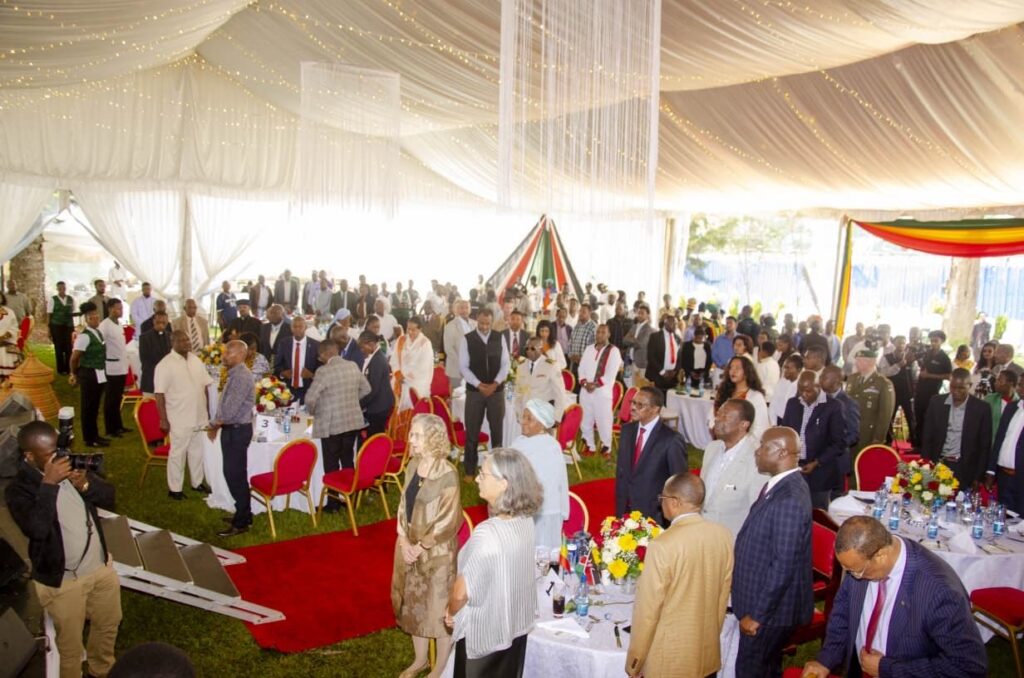
Inside the embassy, that symbolism resonated deeply. Guests stood for a moment of
reflection, acknowledging the battle’s lasting impact across the continent and
throughout the diaspora.
Adwa’s legacy would later echo in the formation of the African Union, headquartered in
Addis Ababa. The battle’s spirit of unity and self-determination fed into the Pan-African
movement and the eventual creation of continental institutions committed to
cooperation and sovereignty.
Food, too, played a central role in telling Ethiopia’s story at the event. Long tables were
laid with injera, the spongy sourdough flatbread that anchors Ethiopian cuisine,
accompanied by richly spiced doro wat, lentil stews and sautéed vegetables. Guests
gathered around platters in the traditional communal style, sharing bites and
conversation. Alongside these were Kenyan favorites, creating a culinary dialogue
between the two nations.
By the evening’s close, the rhythmic drumbeats had softened into warm exchanges and
shared laughter.
In Ethiopia, the day is marked with official ceremonies, including wreath-laying at
monuments, speeches by government and military leaders, and reflections on the
battle’s historical and Pan-African significance. Many attend church services to give
thanks and pray for continued unity and sovereignty. Across the country, cultural
performances bring the history to life, with traditional dances, drum ensembles, and
reenactments of the battle highlighting both Ethiopian life and the bravery of its army.
Educational activities at schools and universities, such as lectures, exhibitions, and
student competitions, reinforce the lessons of Adwa, while community gatherings and
parades allow people to come together dressed in traditional attire, sharing iconic

Ethiopian dishes like injera, doro wat, and tibs. Diaspora communities also join in the
celebrations abroad with music, dance, and cultural festivals. In modern times,
commemorations often link Ethiopia’s historical resilience to contemporary
achievements, such as the Grand Ethiopian Renaissance Dam, framing the country’s
ongoing progress as a continuation of the determination and unity that defined the
victory of Adwa. Overall, the day blends patriotic reflection, cultural pride, and
celebration, uniting Ethiopians at home and abroad in honoring a legacy of
independence, courage, and hope.

