

The Designer Turning Nairobi’s Waste Fabrics Into Runway-Ready Art
When Ezra Loter Lodukae, known professionally as Loter, the creative force behind
House of Son, talks about fashion, he speaks from a place of memory, survival, and
unshakeable purpose. His journey from a childhood in Turkana, stitching scraps of
fabric by hand, to becoming one of Nairobi’s emerging upcycling designers, is a story
shaped by resilience, loss, creativity, and a deep belief in sustainability.
“I used to collect leftover fabrics and stitch them by hand to make clothes for myself and
my father,” he recalls. “What started as necessity became my art.”
Loter grew up in Turkana, the eldest of nine siblings. Life was difficult, he describes
periods of homelessness, lack of support, and the struggles of navigating loss as an
orphan. Yet even in those challenging years, creativity offered refuge. Making clothes
was first a survival skill; later, it became the language through which he’d rebuild his
life.
His childhood hobby eventually grew into a vision. In 2019, he moved to Nairobi in
search of opportunity and stability. Four years later, in 2023, he joined Delight Africa
School of Fashion and Design, where he studied fashion, tailoring, and garment
construction. The school became more than a training institution—it became home.
“I graduated in 2024, but Delight Africa is where I grew up,” he says. “It shaped my
career, my identity, and helped me understand what fashion can be.”
The Birth of House of Son
Today, Loter is the creative director of House of Son, a brand rooted in upcycling,
streetwear, and cultural memory. His work blends urban aesthetics with the resourcefulness of his upbringing, turning discarded materials into high-value fashion
pieces.
“I do streetwear only, all through upcycling,” he explains. “Upcycling is cheap to
purchase but expensive to create. It takes a lot of work and creativity—more than most
people think.”
For Loter, upcycling is not just a trend. It’s a philosophy of living sustainably, using
what is available, and honoring the ingenuity that shaped his childhood.
“Sustainability gives you freedom,” he says. “You can create designs that are different,
inspired by your own story. That’s what I do—I use my life as a source of creativity.”
At a time when Kenya’s fashion industry is grappling with the environmental and
economic impacts of second-hand clothing, upcycling has emerged as both an artistic
and ecological solution. But it isn’t easy.
“Upcycling needs someone who is active and creative all the time,” Loter says. “Not
everyone can do it consistently. But anyone can choose it—it’s about commitment.”
His designs, often bold and richly expressive, frame sustainability as both necessity and
innovation. Yet building a business within this niche presents challenges.
Like many young independent designers, Loter faces significant financial barriers.
“The biggest challenge is financial support,” he says. “Fashion takes money, and being
active all day and all night is exhausting when you don’t have capital.”
Beyond finances, he deals with cultural misunderstanding and stereotyping, especially
as a male designer working in streetwear.
“People judge you for dressing differently or being in fashion,” he says. “Some even call
you gay because of how you express yourself. But I’m a Christian. I follow God’s
commandments. I’m straight. I just love fashion.”

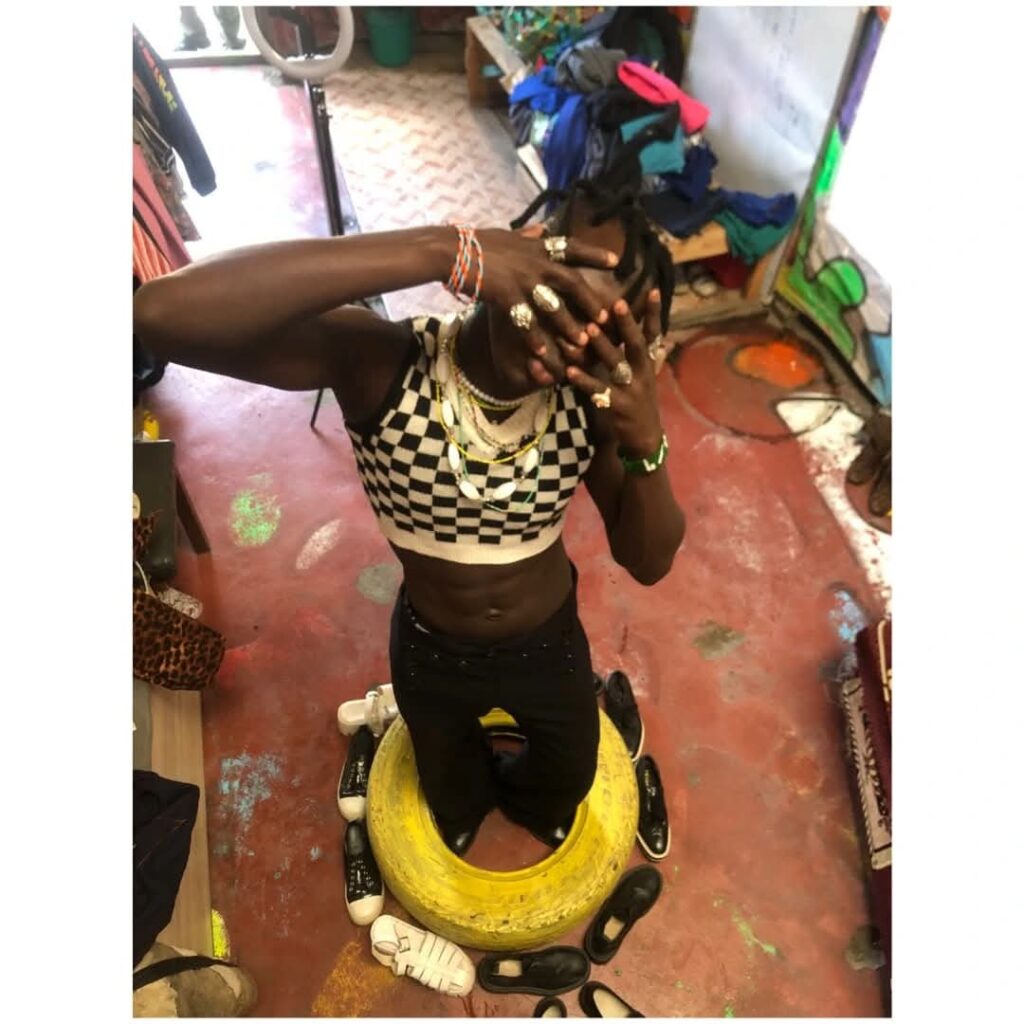
The comments can be hurtful, he admits, but they haven’t stopped him.
“My work speaks for me. My focus is my craft.”
Despite hardships, Loter finds strength in family solidarity. His siblings live in Isiolo,
and though they are unable to support him financially, they share a bond forged in
struggle and mutual belief.
“They know I do fashion, and we believe in each other,” he says. “We were homeless, but
now God is with us. At least we’re hustling.”
This sense of perseverance is woven into every garment he creates. His brand, House of
Son, is not just the story of a designer—it is the story of a family rebuilding itself.
In an industry often dominated by glossy surface narratives, Loter’s work stands out
because it carries texture—of hardship, culture, faith, and innovation. His pieces are not
simply clothes; they are archives of resilience. They tell the story of a boy from Turkana
who learned to make beauty from scarcity and who now uses fashion to advocate for
sustainability and self-expression.
Fashion, to him, is not just fabric. It is a life’s work, a livelihood, and a platform.
“Fashion means a lot in my whole life,” he says. “I’ve experienced so much, and now I
use that experience to create.”


