
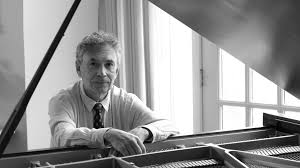
Q: Taras, welcome to Kenya. How does it feel to be here?
First of all, I’m deeply grateful for this opportunity. Not many artists are privileged to visit
a country like Kenya—one with such a strong connection to culture, deep cultural ties,
and a living, breathing multicultural identity. From the moment I arrived, I felt that culture
here is not something preserved behind glass; it is something people live every day.
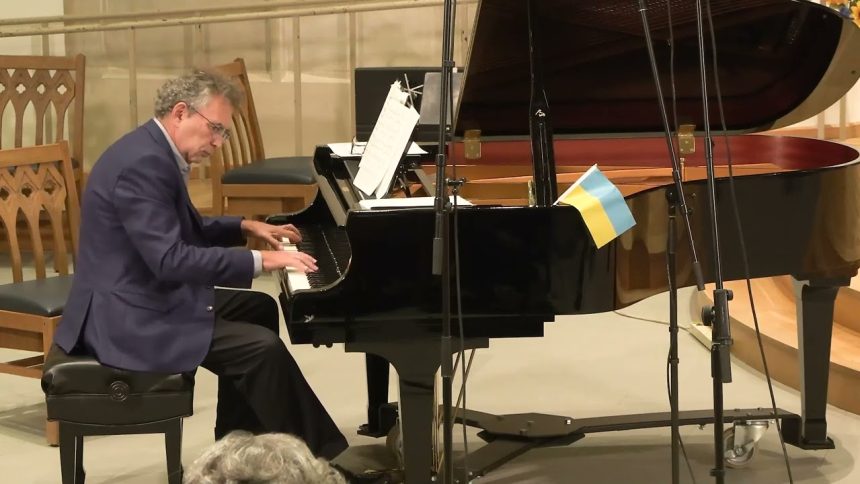
Q: Tell us about yourself and your journey into music.
I was born in Ukraine and educated across Ukraine, Canada, and the United States. I
became a concert pianist, a professor of music, and later a dean at an Academy of
Music in Ukraine. At some point, we opened a department of ethnomusicology, which
led me to pursue a PhD in the United States. That decision shaped my second career.
Ethnomusicology focuses on music outside the Western classical tradition—folk music,
oral traditions, music tied to national identity. This has been my core research interest,
and I’ve published close to 100 academic articles on these themes.
Q: How did the war in Ukraine change your work and outlook?
The Russian invasion changed everything. It has been an incredibly painful time. I lost
several students, and a close relative—also a professor—was killed. This war is not
only about land or resources; it is a war against culture itself.
When culture is attacked, when language, memory, and expression are suppressed, it is
close to cultural extermination. That reality pushed me to act. For the last five years, I’ve
been organising concerts, lectures, masterclasses, interviews, and films—everything I
can—to make Ukrainian culture visible and understood.
Q: Why is sharing Ukrainian culture so urgent now?
Because it is under immense pressure. Ukrainian culture has existed for over a
thousand years, yet much of the world doesn’t know it—largely because it was
historically suppressed. I want people to understand what is happening in Ukraine
today, but also to appreciate the depth, age, and beauty of Ukrainian culture beyond the
headlines.
That’s why I now travel across the world—Asia, Latin America, Europe, North
America—wherever there is an opportunity to speak, play, and collaborate.
Q: Collaboration seems central to your work. Why is that important to you?
Collaboration is everything. I don’t just want to present Ukrainian music—I want to
engage with local artists. In Kenya, for instance, we’re preparing a concert that brings
together Ukrainian music with Kenyan modern dance, a singer who also plays the birra,
a violinist, and even a jazz collaboration.
This blending of traditions is powerful. It shows that cultures don’t compete—they
converse.
Q: This is your first visit to Kenya. What drew you to Africa more broadly?
Africa has been part of my intellectual and emotional journey for a long time. One of my
PhD advisors was the renowned Ghanaian composer and musicologist Akin Euba.
Another was a major African composer whose books are now standard university texts.
Because of them, I developed a strong interest in African music, often comparing it with
Ukrainian traditions in conferences and symposia—sometimes focusing specifically on
countries like Kenya or Ghana.
Q: What similarities do you see between Kenyan and Ukrainian music traditions?
First and foremost, both are deep expressions of the human soul. In societies where
language, publishing, and expression were historically suppressed, music and oral
traditions became the core of identity.
Musically, I see similarities in complexity. Both traditions use polyphony—multiple voices
layered together—and intricate rhythms. In parts of western Ukraine, the rhythmic and
polyphonic structures are surprisingly close to African traditions. But beyond technique,
it’s the spiritual relationship with music that feels shared.
That said, I don’t want to overemphasise similarities. Differences are just as important.
Unity doesn’t mean sameness—it means respecting and celebrating difference.
Q: You’ve spoken about the importance of being “on the ground.” Why does that
matter?
You cannot truly teach or understand a culture from afar. If you have never been to a
country, spoken to its people, walked its streets, you should be very cautious about
claiming expertise.
Today, misinformation and propaganda are everywhere. Being physically present allows
you to engage with primary sources—real people, real experiences. In a way, I have
become a primary source for Ukraine. I can tell you what is actually happening: artists
composing in bomb shelters, people writing music by candlelight because there is no
electricity.
Q: What role should education and travel play in cultural understanding?
A huge one. Travel is education. But not the kind where you stay in hotels and only see
curated experiences. To understand a place, you must step outside that bubble—visit
villages, talk to students, engage with local artists.
Language is also crucial. Without language, half of identity is lost. That’s why I spend
time in universities, schools, churches—giving lectures, playing concerts, teaching
masterclasses.
Q: You once wanted to be an archaeologist. How did music become your path?
Yes, I wanted to be an archaeologist. But when it was time to choose, Soviet authorities
dismantled Ukrainian archaeological institutions. My grandmother told me I would never
find work in that field.
Music, however, was always present. My father played piano beautifully, and my mother
was a musicologist specialising in Ukrainian music. In many ways, music was in the air
at home. Life pushes you to intersections, and sometimes circumstances decide your
direction.
Q: What advice do you give young artists today?
First, don’t put all your eggs in one basket. Artists today need multiple
skills—performance, teaching, writing, management. Business and technology should
be taught in art schools.
Second, surround yourself with strong people early in life. Your classmates often
become your lifelong collaborators.
Third, embrace technology but stay critical. AI, digital tools, and platforms are reshaping
music. Young people should learn them early—not to replace creativity, but to stay
ahead.
Q: How can traditional culture stay authentic while remaining relevant today?
Authenticity doesn’t mean freezing culture in time. It means understanding it deeply
enough to transform it creatively. You don’t copy and paste tradition—you reinterpret it.
That’s why I’m interested not in generic jazz, but Kenyan jazz. What makes it Kenyan?
That twist, that rhythm, that worldview. When artists know their roots, culture earns its
passport to the future.
Q: Finally, what do you hope to be remembered for?
Not awards. Honestly, I don’t even remember many of the places I’ve played—I
remember the pianos.
What matters most are the moments when one or two people in the audience truly
listen. When someone writes to me months later saying a concert changed how they
think or feel—that is my greatest reward.
If I am remembered as someone who helped culture speak when it was under threat,
that is enough.
