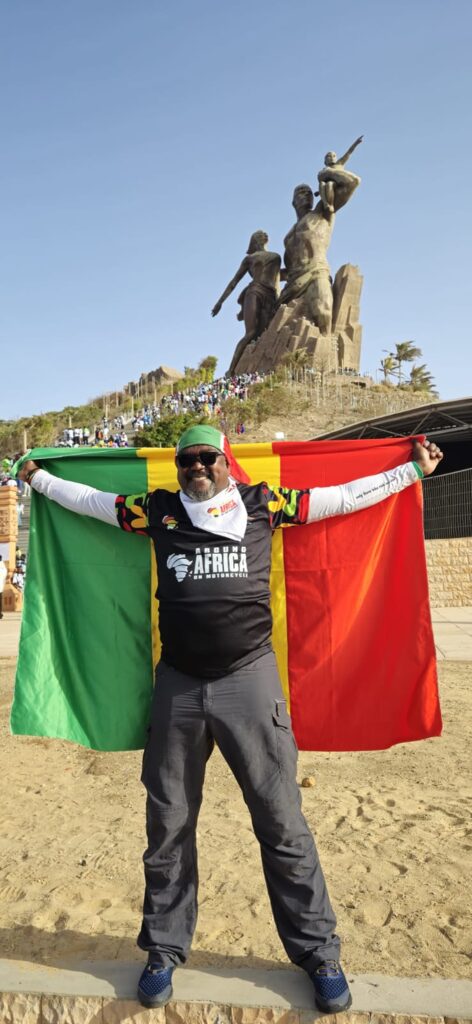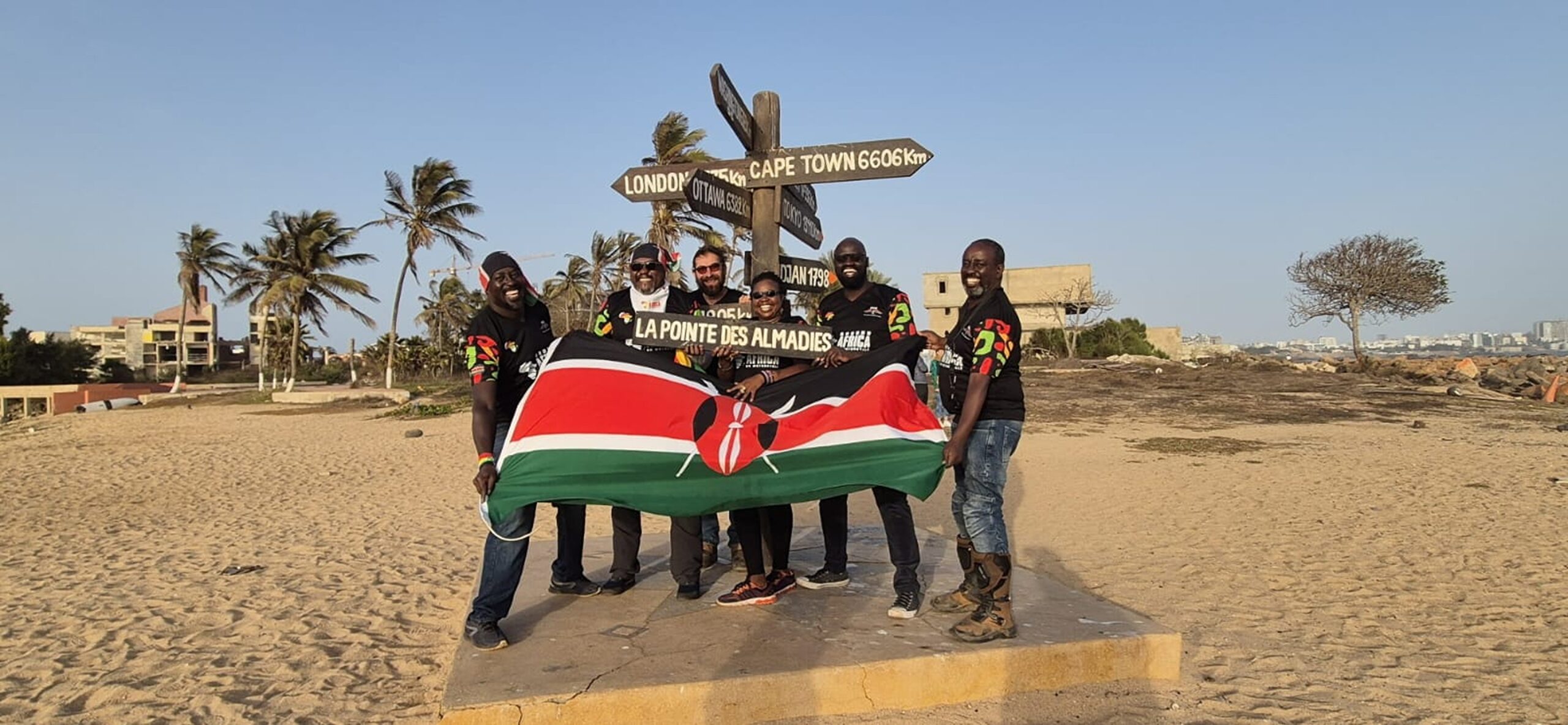
Moses Nderitu’s love for bikes began during his childhood was sparked by admiration
for a neighbor who could pull off impressive wheelies.
“He was the coolest guy around,” he recalls with a smile.
It wasn’t until a trip to Germany in 2006 that he saw biking as more than just a
hobby—it was a lifestyle.
“We were seated at a café when bikers rode in, parked, had coffee, chatted, and rode off
again. One was from Luxembourg, another from Switzerland. It looked like freedom. I
knew then I wanted that kind of life,” he recalls.
In 2008, Moses bought his first bike—a scooter—and began a journey that has taken
him across countries, landscapes, and cultures. Now with 17 years of riding experience,
he reflects on how far he’s come since getting on the road at age 35. His first cross-
border trip came in 2011 when Kenya played Uganda in the so-called “Migingo Derby.”
He and a friend decided to ride to Kampala for the match.
“We went through Eldoret and Jinja, but left Jinja late and ended up riding at night—a
rookie mistake,” he says. “That trip taught me to never ride after dark.”
For Moses, every ride tells a different story. Even revisiting the same place can feel
entirely new.
“Some memories are about the people you meet, others about the landscapes. But
there’s always a moment when you feel like you’re in a divine space—where your senses
are so alive, you’re truly present. Unlike a car, on a bike, you can feel the sun, smell the
farms, even taste the dust. You’re not just passing through the world—you’re part of it,”
he narrates.
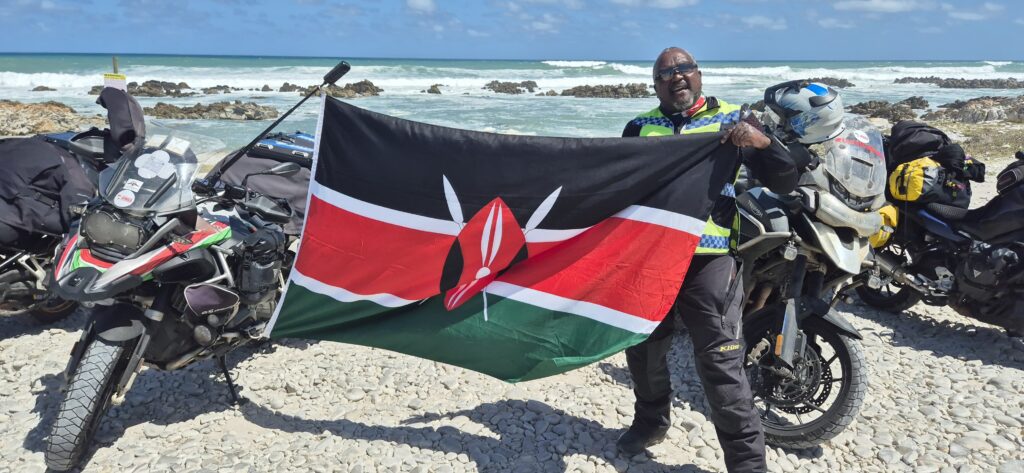
One of his most transformative experiences came during a recent 75-day ride from
Nairobi to Cape Town, then up the west coast of Africa to Dakar. Covering over a dozen
countries, this journey required more mental than physical preparation.
“The bikes have improved over the years, so I wasn’t worried about mechanical issues.
What I focused on was putting things in order at work and home before I left, because
once I’m on the road, I disconnect completely.”
Moses listens to audiobooks or music as he rides, but mental clarity and physical
readiness are key.
“You need to be in shape. Long rides can be punishing. You also need to prepare the bike
with proper tires, a repair kit, and extra fuel. Sometimes you overprepare and carry
things you don’t end up using—but it’s better to be safe,” he adds.
He advises new riders to start small. “Biking is like being a pilot—you begin with a small
machine and grow your confidence. Start with local trips. Sunday rides to places like
Limuru and Kiambu are perfect for beginners.”
Moses started on a 250cc scooter, then moved to a Yamaha 600cc. Today, he rides a
Triumph 1200. “Bikes are personal. Everyone has their preference,” he says.
For a 75-day trip, the average daily cost is about KSh 20,000, depending on
accommodation. Fuel costs range between KSh 6,000–7,000 per day. Additional
expenses include visas, unexpected local taxes, and insurance. To cut costs, the group he
rode with shared expenses, chose budget hotels, and received some sponsorship—like
fuel support from Vivo Energy. “You can’t pre-book accommodation,” he explains. “You
never know what time you’ll arrive.”
He stresses the importance of mental focus and having a solid support system. “You
need to be able to leave home without distractions. Once you’re out there, your mind
should be on the road, not what you left behind. That’s why a strong network at home is
important.”
Biking also demands a good sense of humor and patience. “Border crossings can be
frustrating. Some officials hold you up for hours. That’s why local contacts are gold.
Forget what you read online—local biker communities have the most reliable intel.”
Safety is crucial. “Don’t ride through politically unstable countries. We were in Angola
and planned to pass through DRC, but the Kenyan embassy got attacked, so we changed
route. Also, never ride when tired or at night.”
Moses believes group rides are safer and more fulfilling. “In remote areas, if something
goes wrong, you’re not alone. Some Western bikers ride solo, but in Africa, traveling in
numbers is safer and more fun.”
During the journey from Nairobi to Dakar, they passed through Tanzania, Botswana,
Zimbabwe, Eswatini, Namibia, Angola, DRC, Cameroon, Benin, Togo, Ghana, Liberia,
Ivory Coast, Guinea, Senegal, and finally, Morocco.
Along the way, they encountered both challenges and generosity. “A few places felt
unsafe—like a boat trip from Cameroon to Nigeria—but most locals were welcoming.
Once they heard about our journey, they went out of their way to help.”
Essential gear includes layered riding clothes, waterproof gloves, socks, and raingear.
“Carry light—do laundry on rest days. If you have medical conditions, bring your
medication. Also, carry a local SIM card for each country for navigation and
communication.”
Documentation is also key.
“Carry multiple physical and digital copies. Hide emergency cash in a safe place. And
don’t forget a camera. Capture the moments,” he says. “If you can, get a hotel with a
pool. A quick swim does wonders for tired muscles.”
On dos and don’ts, Moses is clear: avoid riding in unsafe regions, don’t push your limits,
and trust locals over Google.
“The best part of this journey wasn’t just the roads. It was the people, the landscapes,
the cultures, and the personal growth,” he concludes.
Ultimately, Moses rides for the freedom, the thrill, and the sense of purpose it gives him.
“Biking is more than transport. It’s a calling. And when you’re on the road, you realize
you’re not just seeing the world but you’re feeling it,” he says in ending.—take your time and savor the flavors. Some meals are not just eaten; they are experienced.