
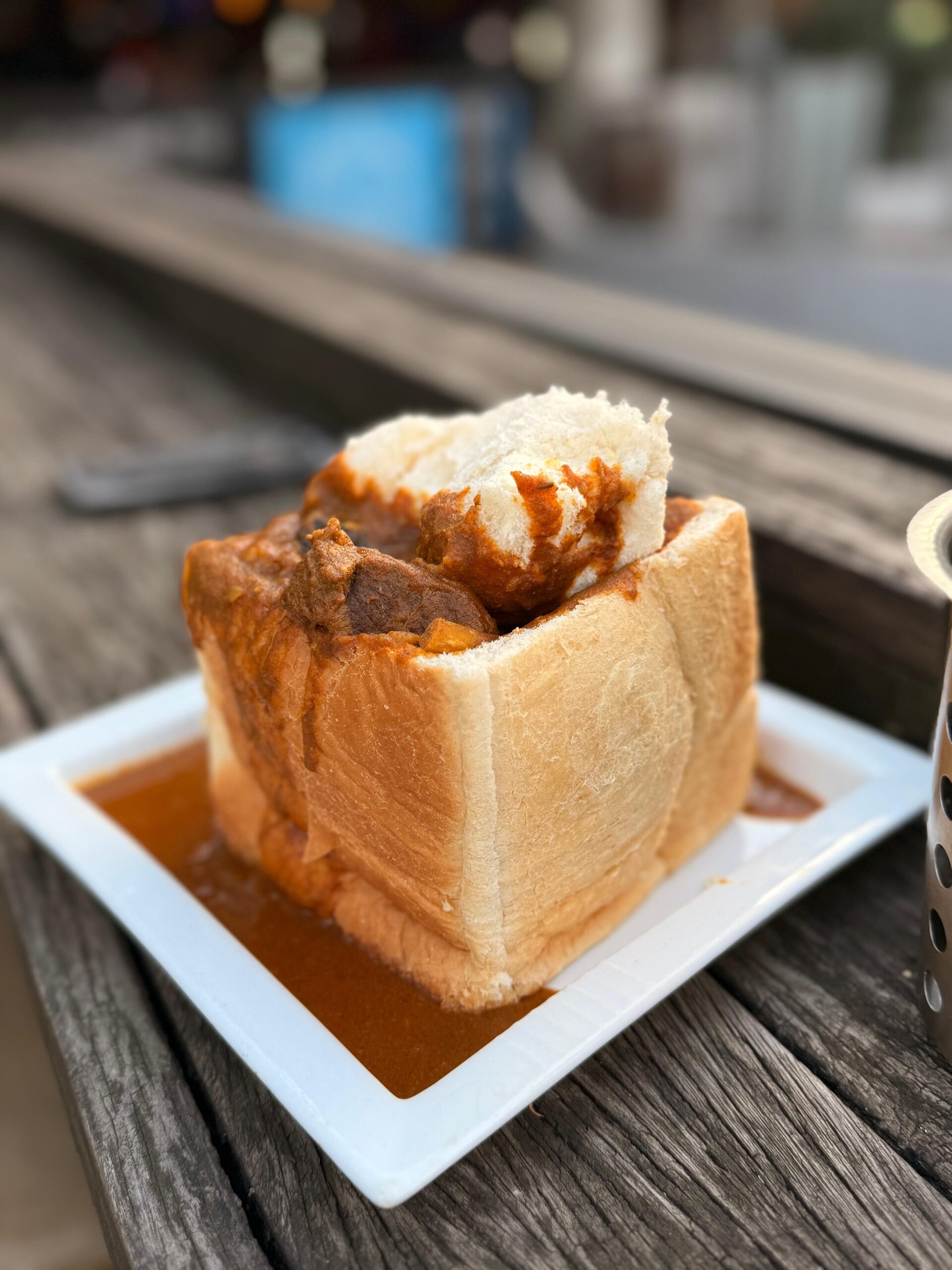
If you had told me that one day I would be sitting on the streets of Durban, waiting to enjoy a hollowed-out loaf of bread stuffed with spicy meat, I would have said you were lying.
Yes, I love bread with all my heart, but I enjoy it the most during breakfast, often accompanying it with tea. In Kenya, bread is seen as the most convenient, quick morning option or, for those who are lazy to prepare lunch, a sumptuous sandwich is the fastest way to end hunger. Kenyans are not traditionally a “bready” nation because local diets have long been centered around indigenous staples like ugali (maize meal), rice, potatoes, and plantains rather than wheat-based foods. Historically, bread was introduced through colonial influence and urbanization, not as part of traditional Kenyan cuisine. As a result, bread never fully integrated into daily meals the way ugali or chapati—which is more festive—did.
But as I learned, one should never say never.
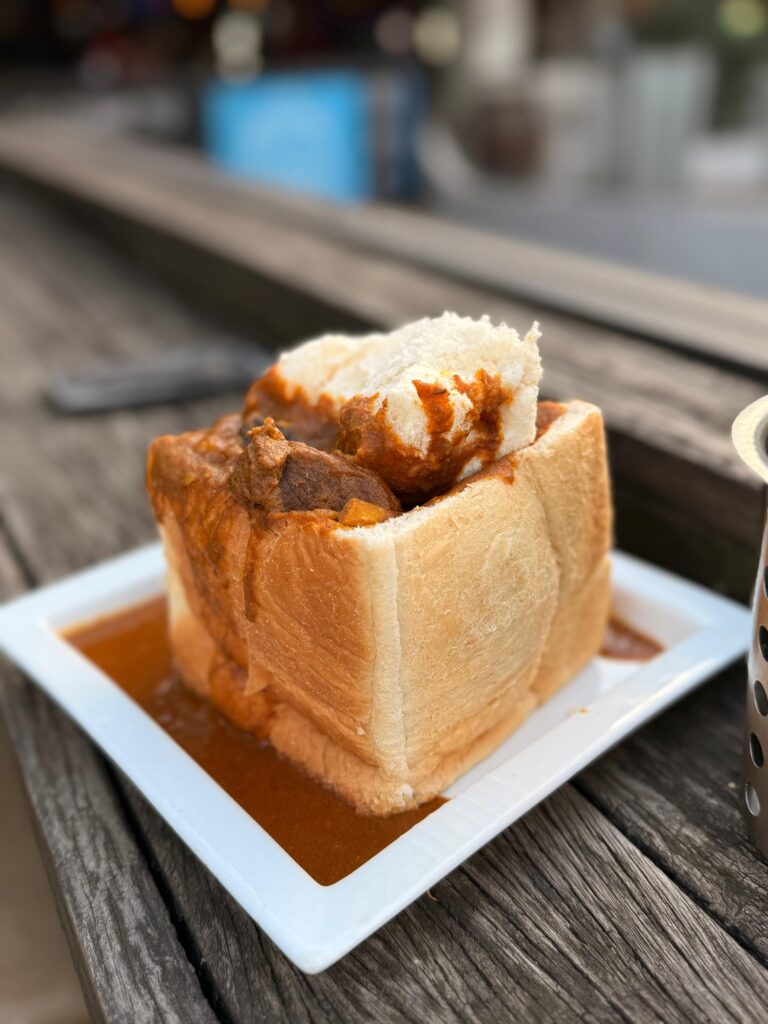
Here I was, enjoying bunny chow, a beloved South African street food with roots in Durban’s Indian community. Bunny chow is a hollowed-out loaf of white bread—usually a quarter or half loaf—filled to the brim with spicy curry, often made with chicken, lamb, beans, or vegetables. I knew immediately that I would never try it with beans or vegetables. I am neither vegetarian nor aspiring to be one in the future, so anything meaty always makes the better option for me.
Eating bunny chow is a hands-on, no-fuss experience. I had to ask my host to assist me so that I wouldn’t make a fool of myself.
“You tear into the soft bread, letting the curry soak through your fingers, each bite delivering a burst of flavor from the fragrant spices,” said Bajabulile, our tour guide.
The bread acts as both plate and sponge, soaking up every drop of sauce. It’s messy, satisfying, and deeply comforting. As simple as it looks, bunny chow is a dish that tells a powerful story of cultural fusion, resilience, and joy in every mouthful.
Bunny chow has a rich and layered history that reflects South Africa’s complex past.
“It originated in the 1940s in Durban, home to the largest Indian population outside of India,” Bajabulile narrated as she helped me get comfortable with the meal. “During apartheid, Indian laborers working in sugarcane plantations and urban areas needed a portable, filling, and affordable meal.”
Traditional roti or metal containers were either not allowed or not practical, so resourceful cooks began hollowing out loaves of white bread and filling them with curry—creating an edible, disposable container.
“The name ‘bunny’ is believed to come from the term ‘bania,’ referring to an Indian merchant caste. Over time, bunny chow became a staple not only among Indian South Africans but across communities. Today, it is loved for its flavor, convenience, and cultural resonance,” she explained.
Eating bunny chow is as much about the experience as it is about the taste. For those who love forks and knives, I would advise you to put them aside—this is one of those meals best enjoyed with your hands. The messiness is part of the fun.

Start from the top, where the bread is soaked with the most flavorful curry. Always have napkins or wet wipes ready, as it can get saucy and spicy. If, like me, you don’t enjoy too much chili, have a cold drink nearby to balance the heat. The good thing is that you can always request less chili or spice in your bunny chow.
Most importantly, don’t rush it. Bunny chow is filling, rich, and spicy—take your time and savor the flavors. Some meals are not just eaten; they are experienced.
