

For German-Cameroonian author and activist Mirrianne Mahn, storytelling is more
than an artistic pursuit. It is a way of understanding identity, confronting historical
injustices and creating space for voices that have too often been overlooked.
As conversations about race, belonging and representation continue to evolve across
Europe, Mahn has emerged as one of a growing number of Black German writers using
literature to explore the complexities of identity in contemporary society. Her debut
novel, Issa, published in 2024 and which she promoted during her recent tour in Kenya,
examines themes of colonial history, intergenerational trauma, migration and belonging
through the experiences of Black women whose lives connect Cameroon and Germany.
Yet for Mahn, writing and activism have always been intertwined.
Born in Cameroon and raised in Germany from a young age, Mahn’s perspective has
been shaped by living between cultures. Growing up as a Black girl in a predominantly
white rural German community made her aware early in life that race often influences
how people experience the world.


“My understanding of Germany has always been shaped by navigating different cultural
realities simultaneously,” she said.
While she describes herself as fortunate to have grown up with a strong sense of family
and identity, those experiences exposed her to the realities of exclusion and difference.
Rather than internalizing those experiences, they inspired her to question them.
Today, Mahn says life as a Black person in Germany continues to be marked by
contradictions.
On one hand, Germany has become increasingly diverse, and discussions about racism,
representation and social justice have become more visible. Global movements such as
Black Lives Matter encouraged broader conversations about issues that Black Germans
have been raising for decades. However, increased visibility has not necessarily
translated into equality.
“Black people in Germany continue to experience racism in schools, workplaces,
housing, healthcare and interactions with public institutions,” Mahn said.
She believes much of this discrimination remains overlooked because Germany often
views racism as a problem that exists elsewhere rather than one rooted within its own
history and social structures.
One of the most persistent misconceptions, she argues, is the belief that Black Germans
are somehow new to the country.
“In reality, Black people have been part of German society for centuries,” she said.
Yet many continue to face questions about where they are “really” from, even when they
were born and raised in Germany. Such interactions, Mahn says, reveal a deeper
challenge around national identity and who is recognized as belonging.
These lived experiences have become central to both her activism and creative work.
For years, Mahn has worked in anti-discrimination education while advocating for
greater diversity and inclusion within political and cultural institutions. Through
workshops, public engagement and political advocacy, she has sought to challenge
systemic inequalities and create more inclusive spaces.
But it is through literature that she believes people can sometimes engage with difficult
subjects most effectively.
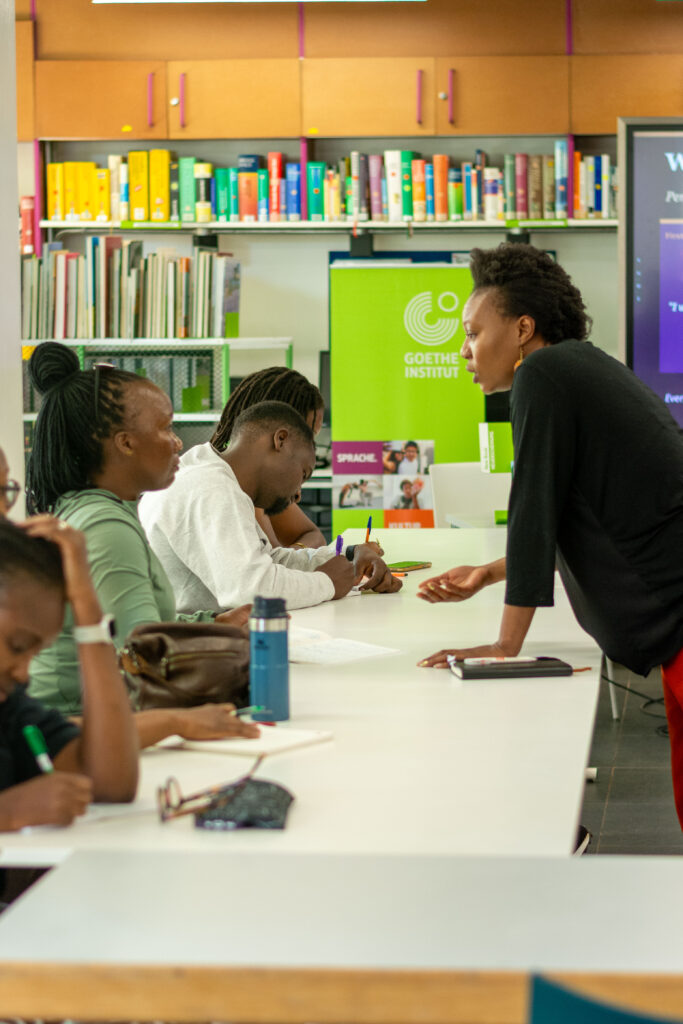

“For me, storytelling and activism are interconnected,” she said. “Literature allows us to
create empathy, complexity and understanding in ways that statistics and political
debates often cannot.”
She discovered her passion for writing as a child. Stories became a way to make sense of
the world around her and imagine possibilities beyond the limitations imposed by
society.
That passion eventually led to Issa, a novel that explores the experiences of Black
women across generations while examining the enduring effects of colonialism and
migration. Importantly, Mahn wanted the novel to move beyond familiar narratives that
focus solely on suffering.
“I wanted to explore the lives of Black women not only through the lens of pain but also
through love, resilience, joy, humour and survival,” she said.
The novel reflects a broader vision that guides much of her work: creating nuanced
portrayals that acknowledge hardship without reducing people to it.
While Mahn welcomes the growing visibility of Black voices within German literature,
she believes significant challenges remain.
There is often an expectation, she says, that Black writers should serve primarily as
educators or commentators on racism. While those themes are important and
frequently appear in her work, she argues that Black authors should have the same
creative freedom afforded to other writers.
“Black writers should be free to tell all kinds of stories,” she said.
The themes that recur throughout her work include identity, belonging, colonial
legacies, gender, intergenerational memory and the search for home. Yet despite the
specificity of her characters’ experiences, readers often tell her they recognize parts of
themselves within the stories.
For Mahn, that response illustrates one of literature’s greatest strengths.
“Specific stories can reveal universal truths,” she said.
“Many stories about Black experiences in Germany remain untold, particularly those
that move beyond narratives of victimhood. Rather than focusing exclusively on
discrimination, I am interested in depicting the full complexity of people’s lives,
including family relationships, humour, everyday routines and moments of joy,” Mahn
shares.
As both a writer and activist, Mahn sees literature as a tool that can contribute to
broader social conversations without necessarily providing definitive answers.
“Literature alone cannot solve inequality,” she said. “But it can challenge stereotypes,
expand imaginations and encourage people to question assumptions they may never
have examined before.”
Among her proudest achievements are the moments when readers, workshop
participants or audience members tell her that her work helped them feel seen or
understood.
Whether through anti-discrimination initiatives, political engagement or literature, she
says those personal connections remain deeply meaningful.
Currently, Mahn is working on her second novel while also curating a major exhibition
at the Humboldt Forum in Berlin. The exhibition will explore questions of cultural
belonging, appropriation and pop culture, themes that continue to occupy much of her
work.
If there is one message she hopes readers take away from her work, it is that identity is
rarely simple.
“Belonging is something we continuously negotiate,” she said. “Our stories matter not
because they are exceptional, but because they remind us of our shared humanity.”
