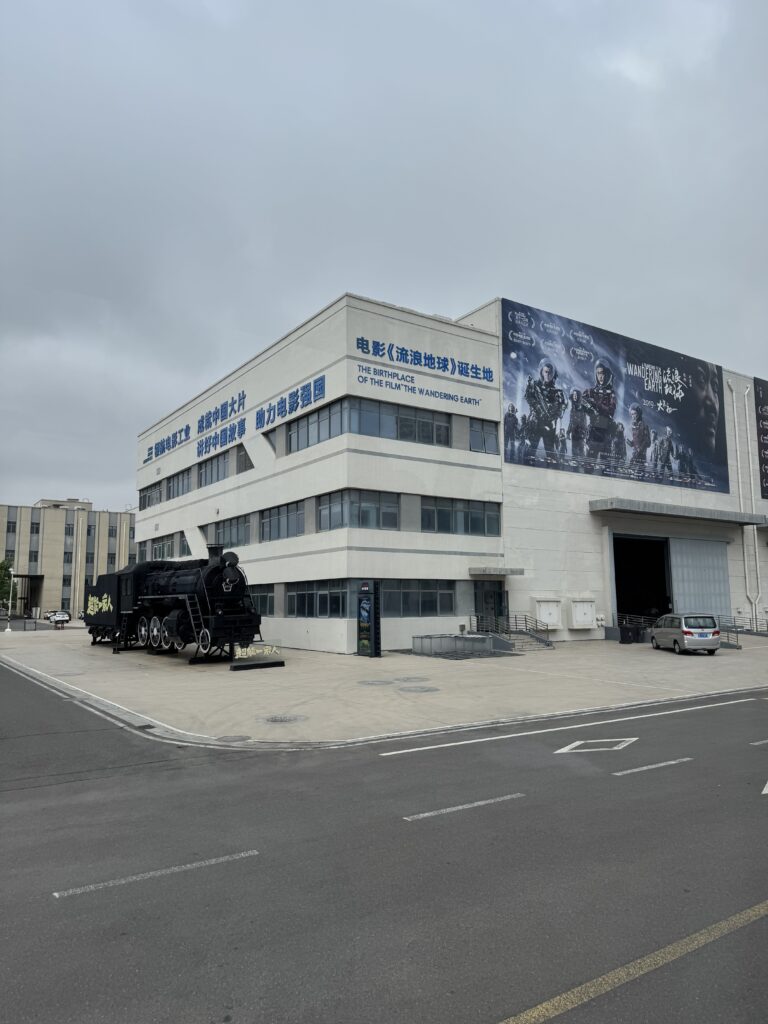
The first thing visitors encounter at the Qingdao Film Museum is not a movie set or a
celebrity exhibit. It is a journey through the story of Chinese cinema itself.
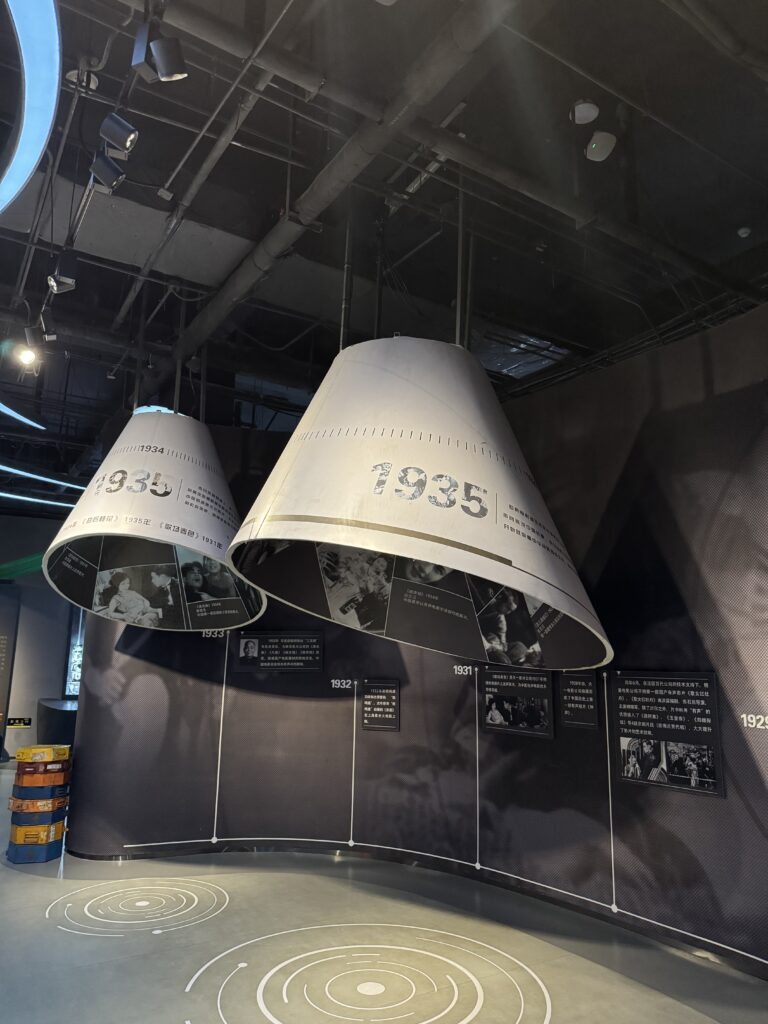
Vintage cameras sit behind glass displays. Black-and-white photographs trace the
country’s earliest silent films. Posters from landmark productions line the walls, while
interactive digital exhibits invite visitors to step into the world of filmmaking. In another
section, visitors can explore how artificial intelligence, virtual production and digital
animation are beginning to reshape how films are made.
Stopping beside a display of vintage cameras and film posters, our guide explained that
the museum traces China’s cinematic journey from its earliest silent films to today’s
blockbuster productions.

“Film has always reflected the changes happening in Chinese society,” said Sky Zhang,
our tour guide. “When you walk through these galleries, you’re not just learning about
movies. You’re learning about China’s history, its people and how storytelling has
evolved over generations.”
This museum, located in the eastern Chinese city of Qingdao, serves as both a
celebration of China’s cinematic history and a glimpse into its future.
But perhaps its most important role is how it tells the story of how a city once known
primarily for its beaches and beer is reinventing itself through film.

Qingdao’s history is as distinctive as its coastline. Located on China’s eastern seaboard
in Shandong Province, the city rose to international prominence in the late 19th century
when it became a German concession in 1898. During this period, many of the
European-style buildings, churches and wide boulevards that still characterize parts of
the city were constructed, giving Qingdao an architectural identity unlike most Chinese
cities. Following Germany’s defeat in World War I, control of the city passed to Japan
before eventually returning to China. Over the decades, Qingdao developed into one of
the country’s most important ports and industrial centres, while retaining its unique
blend of Chinese and European influences. Today, as you drive or walk through the city,
visitors can still see traces of this layered history in the city’s historic districts, red-
roofed villas and waterfront neighbourhoods, where colonial-era architecture stands
alongside modern skyscrapers overlooking the Yellow Sea.
For decades, Qingdao’s global reputation rested on its picturesque coastline, German
colonial architecture and its famous beer industry, celebrated annually through one of
Asia’s largest beer festivals. The city attracted tourists seeking sea views, fresh seafood
and a laid-back coastal atmosphere, some of the things which we enjoyed too while in
the city.
Today, however, Qingdao is pursuing a much bigger ambition of becoming one of
China’s leading film, media and creative industry hubs.
And in doing so, it is demonstrating how cinema can be used not only to entertain
audiences but also to attract investment, create jobs, build talent and transform a city’s
identity.
Building a City for Filmmakers
Located in Qingdao’s West Coast New Area, China Movie Metropolis is another place we
toured that reinforces the idea of how a film city should look like.
The sprawling complex features massive sound stages, production facilities, post-
production centers, visual effects studios and specialized filming environments designed
to support every stage of the filmmaking process.
Among its most impressive attractions is a full-scale submarine set.
Unlike a simple prop, the structure has been designed as a realistic filming environment
where directors can shoot scenes that would otherwise require expensive underwater
locations or extensive digital effects.
“One of the most impressive facilities we have developed is a full-scale submarine set
designed specifically for film production,” said filmmaker Chan Xu during a tour of the
complex.

“The goal is to provide filmmakers with a highly realistic shooting environment that
would otherwise require costly location filming or extensive visual effects work. By
creating these immersive sets, we can help productions achieve greater authenticity
while improving efficiency and reducing costs.”
The submarine is only one example of the specialized infrastructure being developed.
“Our vision extends beyond traditional studio spaces,” Xu said. “We are developing a
comprehensive filmmaking ecosystem that combines physical production infrastructure,
cutting-edge technology, artificial intelligence applications, animation development and
post-production services. We want filmmakers to find everything they need in one place,
from concept development to final production.”
The scale of the investment reflects China’s growing recognition that film is not merely
entertainment. It is an industry capable of generating economic activity across tourism,
technology, education and media.
Where Technology Meets Storytelling
In another section, researchers and developers were working within the complex are
exploring how artificial intelligence can support content creation, animation
development and visual effects production. Teams demonstrated AI-assisted animation
tools, experimental production technologies and emerging applications designed to
streamline workflows that once required extensive manual labour.
Other projects are exploring how AI can be integrated into theatre and live performance,
creating immersive experiences that blur the lines between physical and digital
storytelling. The strategy mirrors a broader global trend as entertainment industries
increasingly embrace artificial intelligence, virtual production and digital content
creation.
The Tourism Power of Film
What makes Qingdao’s approach particularly interesting is its recognition of film’s
influence beyond the screen.
Around the world, cities and countries have discovered that films and television shows
can become powerful tourism marketing tools.
New Zealand transformed itself into a global tourism destination through The Lord of
the Rings trilogy. South Korea has benefited enormously from fans travelling to
locations featured in popular K-dramas. Cities such as Dubrovnik in Croatia saw
tourism surge after appearing in Game of Thrones. Closer to the continent, South Africa
has Cape town and Durban transforming into film cities with various Netflix as well as
international films being recorded there.
A landmark study by researchers at Annals of Tourism Research found that movies can
significantly increase visitation to filming locations, with some destinations
experiencing visitor growth for several years after a film’s release. The study concluded
that films can motivate people to travel specifically to locations they have seen on
screen. By developing film infrastructure while simultaneously promoting its cinematic
identity, Qingdao is showing the world that it understands this assignment and is
creating another reason for visitors to come. The museum, studios and production
facilities are becoming attractions in their own right.
Building Talent, Not Just Studios
Apart from infrastructure, Qingdao’s strategy places significant emphasis on developing
the next generation of filmmakers. At the Qingdao Film Academy, students are being
trained in directing, cinematography, animation, digital media and emerging creative
technologies. The institution serves as a pipeline of talent feeding into the city’s growing
creative economy.
“Building studios is important, but building talent is essential,” said Annie Guan, dean
of the academy.
“Without skilled people, infrastructure alone cannot sustain a creative economy.”
The academy’s proximity to major production facilities allows students to engage
directly with professionals and emerging technologies, creating a bridge between
education and industry.