Every 3 rd June, Anglicans and Catholics from all over Africa flock to Kampala to follow
the footsteps of the Ugandan martyrs, commemorating their profound faith. Before the
pandemic, it is estimated that over 10,000 people traveled all over the continent just to
connect with their faith. One can also witness several events on that day like baptism,
prayers and a lot of feasting. They also feel like if they get to be here, they will receive
blessings from God. Some like me, who toured the city get fascinated by the history of
the place. And Christians are not the only faith who makes pilgrimage to Kampala, the
city of seven hills. The city hosts Gadaffi mosque, the second largest mosque in Africa
and also it’s the home Bahai to the magnificent Bahai temple, the only one in Africa.
The United Nations World Tourism Organization estimates that globally, around 300-
330 million tourists visit the World’s key religious sites annually with approximately
600 national and international religious voyages in the world. The largest form of mass
religious tourism happens in Mecca where nearly two million pilgrims annually as well
as about 14 million people in the city. This means that the world can no longer ignore
the contribution of this kind of tourism to economies.
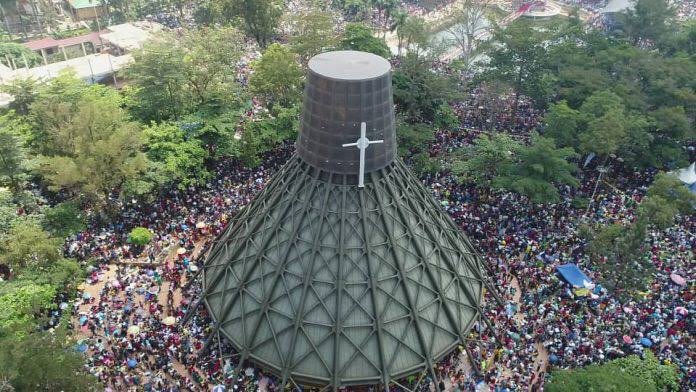
My first stop was at Namugongo Matyrs church Cathedral an Anglican which is the first
Anglican headquarter in Uganda. It is here where 49 martyrs were burnt to death for
their faith. In 1879, the first Roman Catholic missionaries came to Uganda and
established a church there. The first Kabaka Mutesa tolerated this movement but his
successor, Mwanga didn’t. He had collaborated with the Arabs to continue with slave
trade of which the missionaries were opposed and this made him launch an attack
against the missionaries and their followers. Some were speared, others hanged, others
had their bodies dragged along the way till they bled to death. Others were taken to
prison to give them time to change their mind but they didn’t and were killed. In the
shrine, sculptures were created, a replica of what these people experienced. The king
also murdered his own sister, Catherine Kalala for her faith and she was buried her near
the king.
Our next stop was at the Basilica Church of the Uganda Martyrs which is affiliated with
the Roman Catholics in Uganda. It’s around 3 km from the Anglican church and this is
where majority of the Catholics were martyred. The church was constructed in the year
1969 and this was spearheaded by the late Pope Paul VI on his visit to Uganda and the
Sub-Saharan Africa. In 1993, the late Pope John Paul II visited Uganda and was here too
in 1993, made pilgrimage to the Basilica, on their visit to Uganda.
One can buy souvenirs like documentaries, rosaries and book items at the bookshop
before departure.
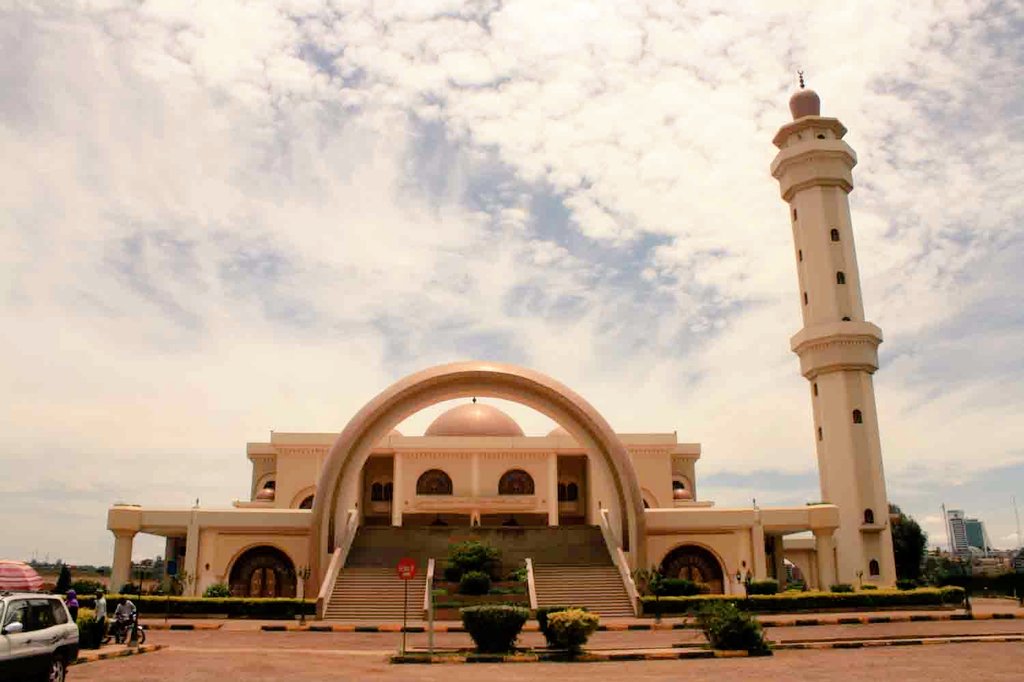
Kampala is also home to the national mosque is also referred to as Gadaffi mosque
which is the biggest mosque not just in Uganda but in Africa. It’s around 5 dollars to
enter and one is required to wear modest attire in respect to their religion. In the
mosque, one is taught on the history of Islamic religion in the country.
Its construction was financed by the late Muammar Gaddafi after the first mosque,
which was built in the 1970s by the late Idi Amin Dada remained incomplete after his
death. The second construction was carried out by Moroccan engineers and began in the
year 2003. In 2008, it was handed over to the Ugandans. The carpets were imported
from Libya while the magnificent chandeliers were imported from Egypt. The mahogany
which were fixed on the wall are said to be imported from DRC Congo and on it is
calligraphy with 99 beautiful names of Allah as well as verses from the holy Quran for
meditation. The structure can host 35,000 members; 25,000 men and 10,000 women
And Friday is their jumaa which is like the Sunday services for Christians.
It takes 314 stairs to get to the minaret, the highest point at the mosque. From here, one
has breathtaking views of the old Kampala city. The city was once a thick forest before
the British settled and it was transformed into a city. The central region is dominated by
the Baganda and around a fifth of Uganda’s speak Luganda.
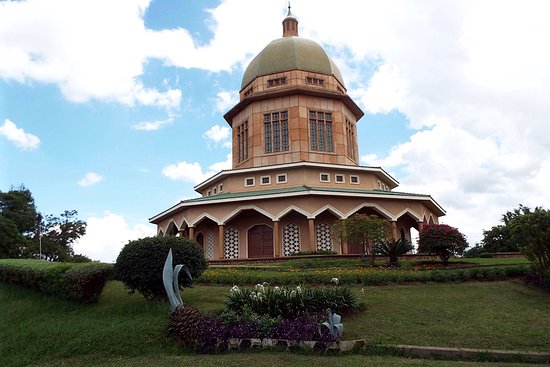
Our last stop was at the magnificent Bahai temple. This is the only temple in Africa for
the bahai religion which makes it have the most pilgrimage in all the faiths.
It was my first time to know that this faith exists and I learnt that the Baha’i Faith is
dynamic and has over seven million die hard faithful from a variety of cultures and
religion. The central figure of the religion is Baha’u’llah, and the followers look upto
him as the latest in a series of divine messengers. The Bahai faith began in matokeland
in the year 1951 which makes it one of the earliest religions in East Africa.
The temple was built around 1957 on top of Kikaya hill which is around 3km north of
Kampala and sits on 52 acre of land and features a 130-foot dome and is 44 feet wide.
The unique architecture was inspired by the African hut and once you are in, now one is
permitted to take photos as its sacred place.
Because of the silence and serenity of this place, most couples tie the knot here and
others have turned its gardens into a photo shoot site. In addition, people from different
faiths hold their events in the gardens.
Requirements to get to Uganda
Passport/ or a temporary one for EAC citizens
Visa (for non EAC citizens)
Alternative travel documents for East Africans like yellow fever
Ensure that you change your cash in Uganda shillings in the country for a better
rate. There are Mpesas though in the country but you are charged an extra cost.