
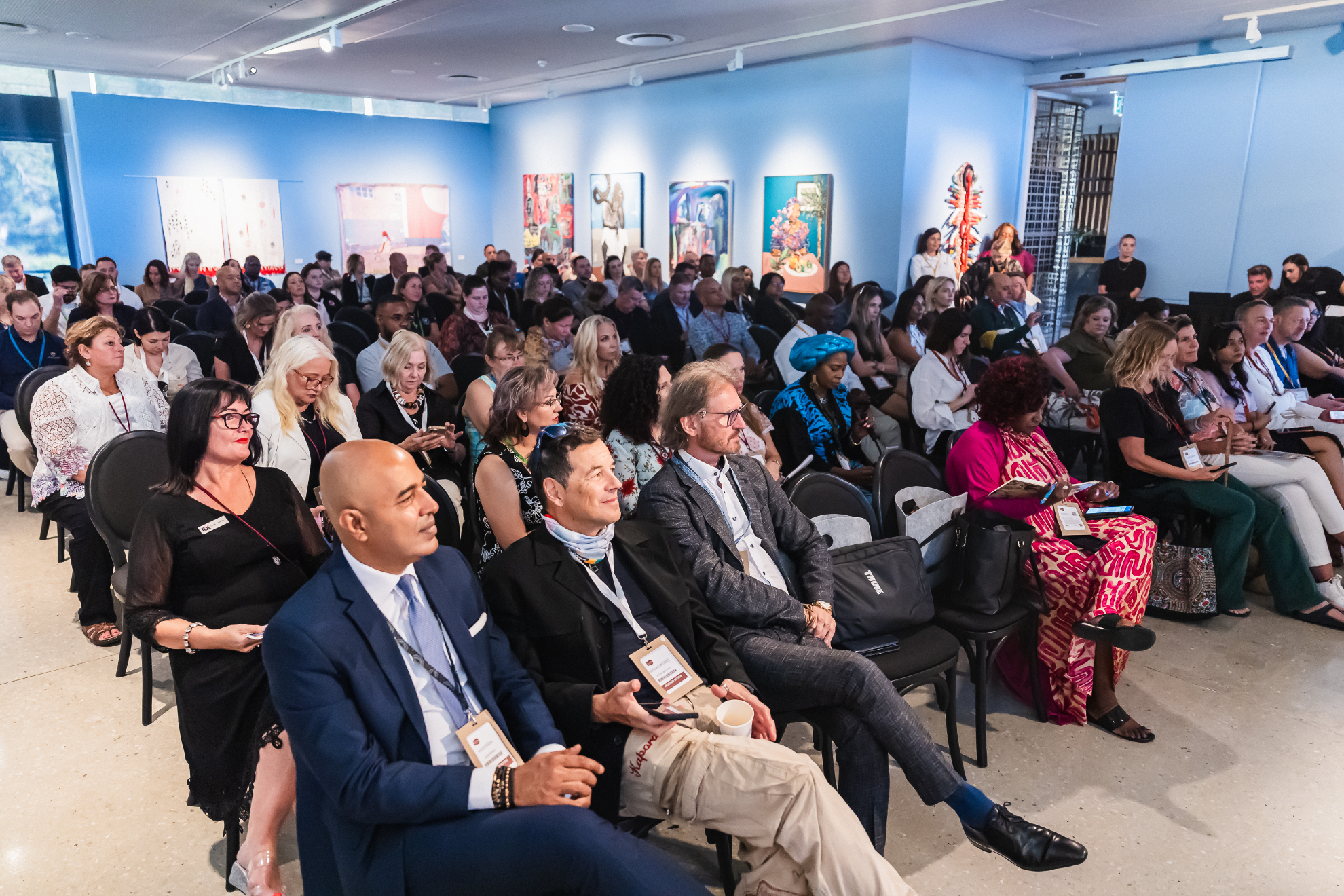
With South Africa’s MICE industry enjoying year-on-year growth, government support, and fresh off
the success of the G20, the events sector is poised for a standout year – if it pays close attention to
what’s happening regionally and abroad. And while trend reports talk to increased ‘personalisation’
and more ‘immersive, experiential’ events, success now demands value (what do you get for the
cost of your attendance?), impact, and the quick adoption of new tech.
We spoke to Carol Weaving, Managing Director RX Africa, about the trends clients, venues and
planners can’t afford to ignore:
The 72-hour window. According to the global meetings, events and hospitality tech provider, Cvent,
planners now expect venue responses within three to four days (tops) – with a quarter of planners
saying slow replies are one of the most frustrating parts of the process. The take-out? The first
responder with a tailored proposal wins.
Smart tools to tackle the legwork. Hand-in-hand with speed? Efficiency. 84% of planners are using
AI-powered platforms (aka venue finders) to source venues quickly and the latest features include
everything from sustainability-first sourcing to hybrid-ready and flexible spaces, local experience
integration, and instant booking technology.
AI for operational excellence. The MICE sector has been one of the quickest adopters of AI, with
Generative AI and Agentic AI tools used to streamline operations and personalise attendee
experiences. But as Weaving explains, while AI can easily automate repetitive, time-consuming tasks,
its real power lies in transforming the attendee experience.
“AI can help to personalise agendas, facilitate connections and target content,” says Weaving. “This
is especially important as today’s attendees are looking for meaningful networking opportunities and
new, relevant content and you have to be able to deliver. Get fluent in tech, embrace AI, or get left
behind.”
New metrics. Proving value through data. Return on experience. Whatever you choose to call it,
Weaving says sponsors expect more than visibility – and attendees expect more than a keynote.
“Attendee engagement is fast becoming the most important metric,” says Weaving. “Yes, cost or
attendee numbers are important, but 2026 is all about measurable ROI with hard data: lead
conversion rates, engagement metrics, behavioural analytics. The shift toward Return on Experience
(ROE) means sponsors are now focusing on engagement, learning, networking, brand perception,
and overall satisfaction.”
The Gen Z factor. Ignore this at your peril, says Weaving! Gen Z has overtaken Baby Boomers in the
workforce, bringing fundamentally different event expectations. This demographic expects digital-
native experiences: intuitive systems, mobile-first design, and networking that works for introverts
and extroverts alike. Organisers designing exclusively for older professionals are creating events that
tomorrow’s decision-makers will skip. The solution? Think mobile-first, visual-forward, and flexibility
in how delegates connect.
Breathing room. Wellness is still top of mind and research shows that energised, healthy attendees
are more engaged and derive more value from events. Enter hydration stations and healthy food
options (including vegetarian, vegan and allergen-free choices). Yet many organisers still pack
agendas with back-to-back sessions. The cost? Lower satisfaction scores, reduced engagement, and
delegates who leave exhausted rather than energised. Smart organisers build space in the schedule,
create quiet spaces, and design more thoughtful, experience-led formats.
Second-tier cities. First-rate experiences. With more than 70% of planners facing higher
accommodation rates and AV costs continuing to climb, Cvent says nearly half are exploring second-
tier destinations to stretch budgets. Globally, this shift is unlocking discounts of 12-18%, while in
India, tier-II cities now contribute 35-40% of domestic MICE activity. The caveat? These destinations
must deliver top-tier service and technology – reliable connectivity, modern AV, and adequate
infrastructure – to succeed. Weaving says we’ll see more and tier-II options as secondary cities (like
Stellenbosch and George) invest in the fundamentals first, market their cost and ‘bleisure’
advantages, and position themselves as a smart alternatives rather than a compromise.
Sustainability gets serious. According to Liberty International Tourism Group, 88%
of corporate travellers now prefer eco-conscious event partners, with many companies mandating
ESG compliance. But international clients are conducting full ecosystem audits – examining venue
energy sources, waste partnerships, supply chain equity, and critically for South Africa, water
stewardship. With water scarcity a nationwide concern, progressive organisers will need to be
prioritising water alongside waste and energy.
“This isn’t just ethical,” says Weaving. “It’s becoming a business imperative. Venues that can
demonstrate authentic sustainability credentials through transparent reporting are winning
international contracts, while those relying on surface-level gestures lose out to destinations that
have embedded ESG compliance systemically. Importantly, MICE events can no longer focus on the
‘green aspects’ like waste and energy while glossing over the deeper ‘S’ and ‘G’ – particularly in
terms of local economic empowerment. Are local SMMEs genuinely integrated into procurement, or
is it tokenistic? Sustainability and social responsibility go hand-in-hand.”
Spaces that work. Venue sourcing has shifted dramatically, with 48% of planners looking at non-
hotel locations (Cvent, 2025), including restaurants (45%), bars (23%) and wineries (19%). They’re
prioritising flexibility (41%), attendee experience (35%), and unique amenities (32%). But aesthetics
without functionality fail. A stunning space with poor acoustics, cramped networking areas, or
awkward layouts undermines engagement regardless of how impressive it looks. Smart planners ask
practical questions first: Can delegates hear clearly? Move freely? Access varied spaces for different
interactions – breakout areas for focused conversations, open zones for mingling, quiet corners for
one-on-ones?
For Weaving, the best venues aren’t just photogenic, they’re designed for how people actually
connect, learn and work.
“For example, The Norval Foundation in Cape Town plays host to ILTM Africa in April. It has a
stunning setting, combining world-class art with the natural beauty of the Cape Town landscape, but
more than that, it’s indoor and outdoor spaces, including an incredible sculpture garden, provide
numerous opportunities for exploration and discovery while conducting business.”
Ultimately, Weaving says the MICE sector has entered 2026 feeling strong.
“The industry is still buoyed by the success of the G20, and we have a full calendar of events to look
forward to, including WTM Africa. If we can deliver measurable value, prove impact and facilitate
real connection, the demand for face-to-face experiences will be stronger than ever.”y—take your time and savor the flavors. Some meals are not just eaten; they are experienced.
