
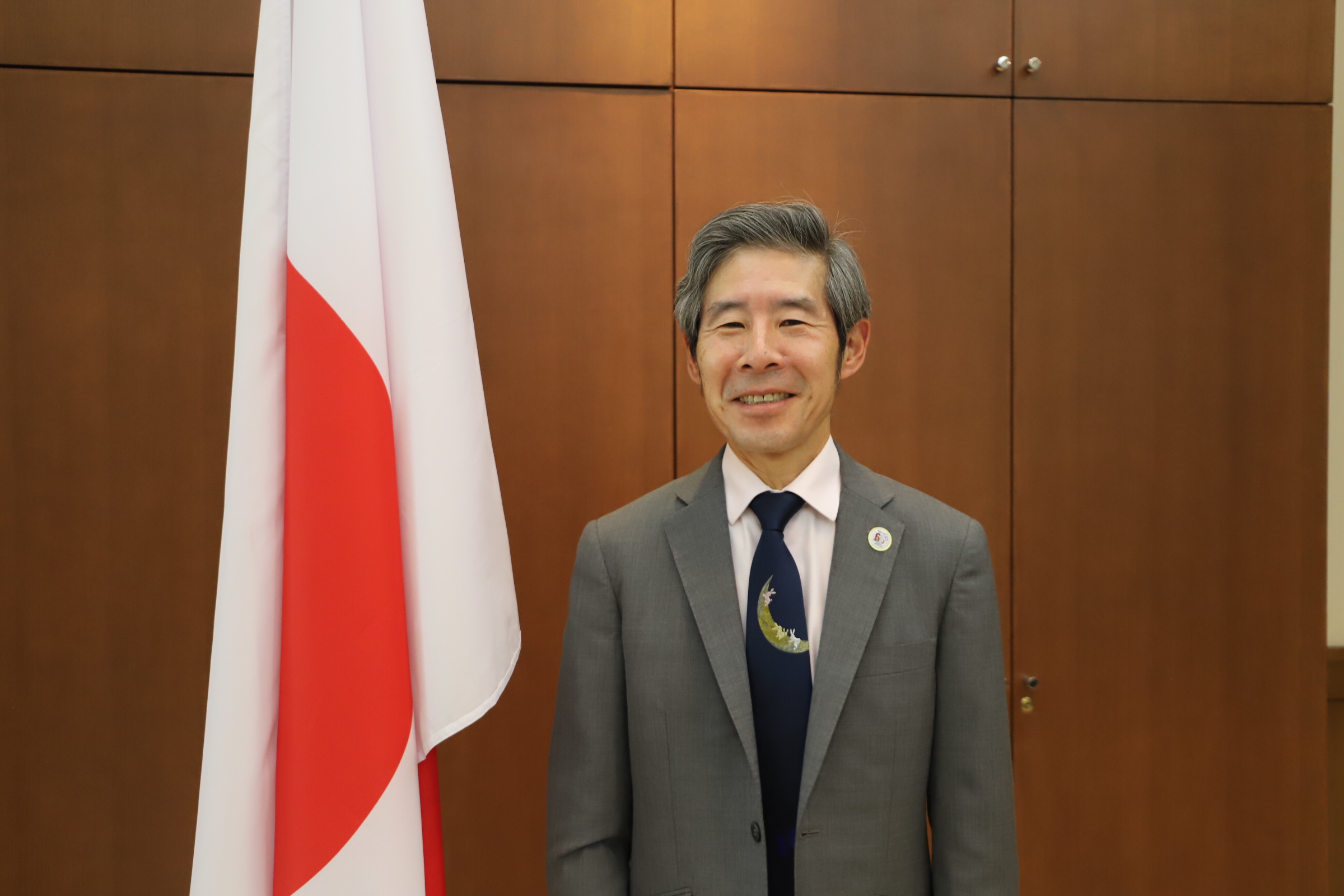
Ambassador Okaniwa Ken: Culture, Travel, and 60 Years of
Kenya–Japan Relations
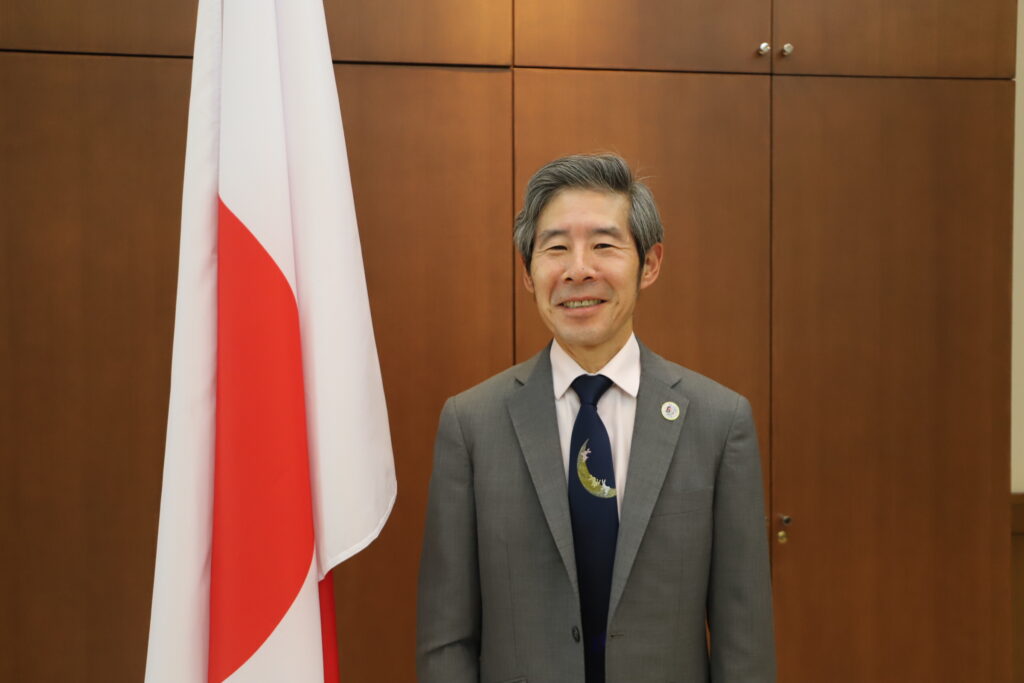
Your tie has an interesting motif. Does it have a meaning?
Yes, it does. We follow the lunar calendar, and this is the Year of the Rabbit. That’s
why I’m wearing a tie with rabbits on the moon making mochi. It comes from a
traditional fable. I bought it in Ginza, which is the capital of shopping in Japan.
How has your experience in Kenya been so far?
This is my third posting in Africa. I had visited Kenya twice before my posting on
official business, so I was somewhat familiar with the country. However, being
posted here and experiencing day-to-day life is very different. It has been very eye-
opening and enriching.
What were some of the culture shocks you encountered?
The traffic was one of the biggest shocks. It is quite unpredictable, yet it seems to
function as a norm. In Japan, drivers strictly follow regulations, but here you cannot
always be sure which direction someone might take, and that can be confusing at
first.
What about the food? Have you sampled Kenyan cuisine?
Yes, very much so. I have travelled to about 18 counties, and during these visits I
always try the local food. I never reject food without tasting it. One of the most
interesting discoveries for me was brown ugali because its texture is very similar to
Japanese mochi.
What would you recommend Kenyans try when visiting Japan?
I would recommend dango, which are Japanese rice balls. They are sweet, tasty, and
have a texture that Kenyans might find familiar.
Which places have you explored in Kenya so far?
I have visited the Maasai Mara and the Coast, among other places. I also climbed
Mount Kenya last year, which was much more challenging than I expected. I had
previously climbed many mountains while posted in Geneva, so I assumed it would
be easier, but Mount Kenya is truly a high and demanding mountain.
Are there destinations you still hope to explore?
Yes. While I have been to Turkana County, I would love to explore Lake Turkana
itself. I saw photos before coming to Nairobi and felt it was an incredibly beautiful
landscape.
What is Japan best known for globally?
Japan is the first developed country that is non-Western. We avoided colonisation in
the 19th century. After World War II, about 85 percent of our economy was
destroyed, but we worked very hard to rebuild and became the second-largest
economy in the world after the US. Today, we are the third-largest, after China.
Japanese people are also known for being polite, courteous, and highly focused on
doing their best in whatever task they undertake.
How many Kenyans travel to Japan, and what about Japanese visitors to
Kenya?
Before the pandemic, Japan received between 2,000 and 2,500 Kenyan visitors
annually, which is still a small number. In 2019, about 13,500 Japanese tourists and
business people visited Kenya. I would like to see these numbers grow on both sides
to deepen mutual understanding.
Is a direct flight between Kenya and Japan likely soon?
We are working towards it, but it is a difficult time for airlines and the tourism
industry globally. For now, most travellers transit through Dubai or Qatar.
What is the visa process like for Kenyans travelling to Japan?
Kenyans need to apply for a visa at the Japanese Embassy. All the requirements are
clearly outlined on the embassy’s website. There are no special restrictions, but
applicants must provide the required documents.
What can Kenyan travellers expect to experience in Japan?
Japan has four very distinct seasons. Spring is famous for cherry blossoms; summer
is hot and humid and has unique attractions like fireflies; autumn has cooler
weather, beautiful foliage, and abundant produce; and winter offers snow, skiing,
frozen lakes, and ice fishing. Each season offers a completely different experience.
What about architecture and culture?
If you love architecture, Japan’s major cities showcase innovative modern buildings
designed by some of the world’s most influential post-war architects. At the same
time, Kyoto—our ancient capital—offers traditional temples, shrines, and imperial
palaces set within forests and mountains.
Which foods should visitors definitely try?
Japanese cuisine is very diverse—grilled, fried, stewed, or raw. We use ingredients
from both land and sea. Beyond sushi and tempura, visitors should try curry rice,
which we adapted from British cuisine. Tokyo also has the highest number of
Michelin-starred restaurants in the world.

As Kenya and Japan mark 60 years of diplomatic relations, what can the
two countries learn from each other in tourism?
There is a warm bond between our peoples built over many years. Kenya’s safaris are
very famous in Japan due to television programmes and documentaries. If a Kenyan
says they are from Africa, many Japanese immediately think of Kenya. Promoting
Japanese cuisine in Kenya could also strengthen tourism links further.
What advice would you give Kenyans visiting Japan for the first time?
Learn a little Japanese before you go—the embassy and some local associations offer
free lessons. Do not hesitate to ask for directions; people will always try their best to
help. I also encourage visitors to explore regions beyond major cities and, finally, to
practice using chopsticks.
What do you enjoy most about being an ambassador?
The variety. Diplomacy covers many aspects of bilateral relations, but the greatest joy
is meeting interesting people from different backgrounds. That is what makes this
job so rewarding.


