
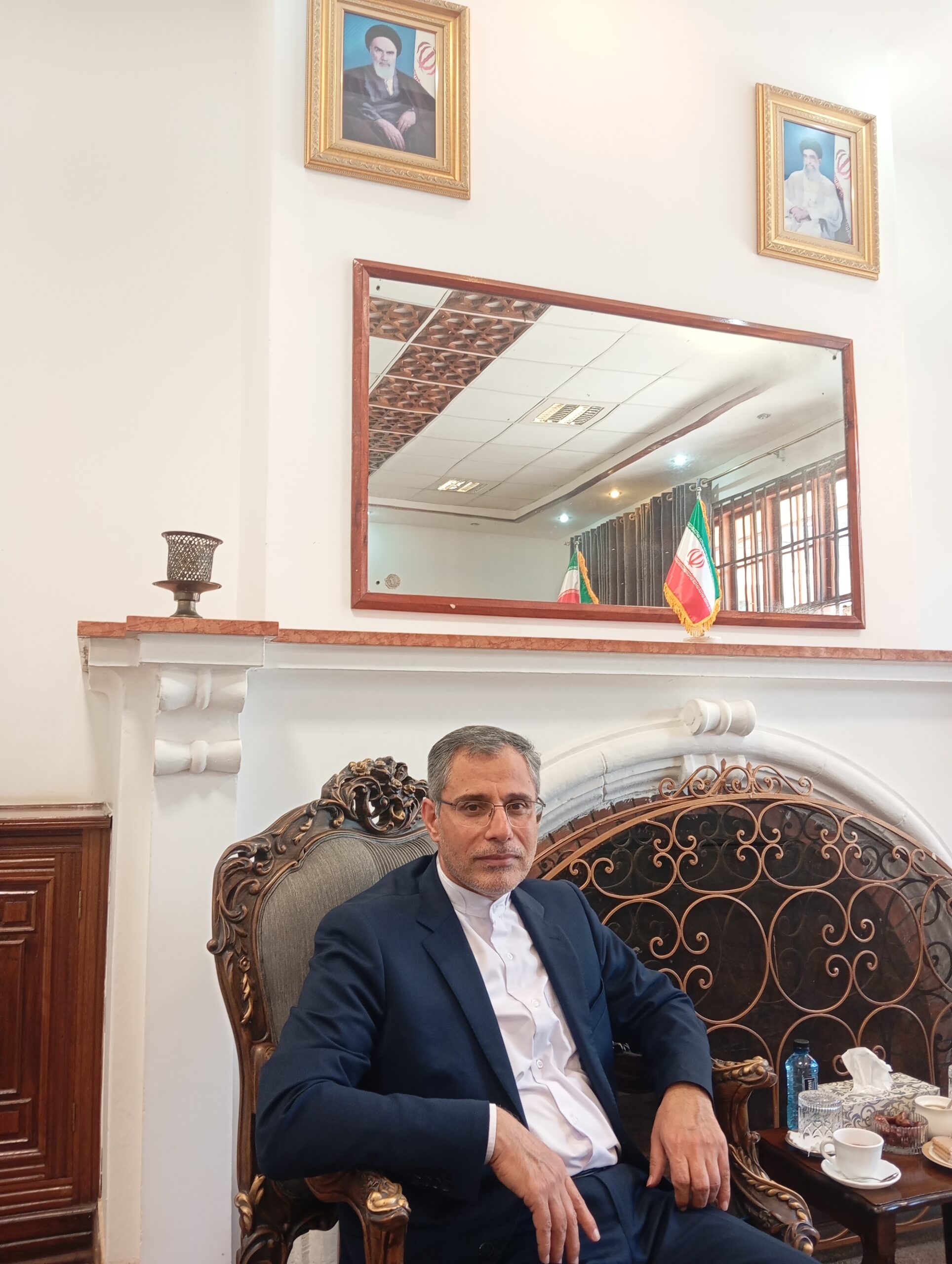
In a wide-ranging interview, H.E. (Dr.) Ali Gholampour, the Ambassador of the Islamic
Republic of Iran to Kenya addressed longstanding global narratives about the country,
its nuclear programme, regional tensions, the US and Israel military attacks on Iran,
and Iran’s relationship with Africa, including Kenya. The conversation comes at a time
of heightened geopolitical tensions and renewed scrutiny of Iran’s role in global affairs.
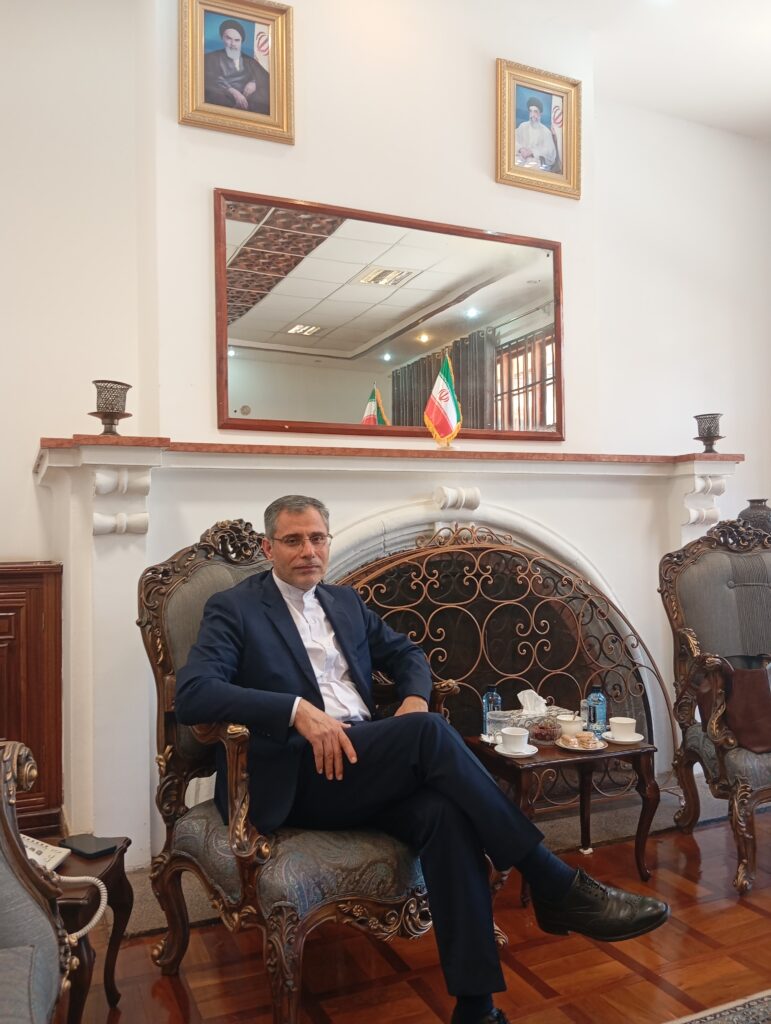
Q: Iran is frequently depicted as a major threat on the global stage. From
your perspective, what is true about this portrayal, and what might be
misunderstood or overstated?
There are many misconceptions that have been constructed over time, and they do not
reflect reality. The idea that Iran is a threat to international peace and security is, in our
view, completely false. Historically, Iran has not initiated aggression against its
neighbors. On the contrary, it has often been on the receiving end of external
interventions and attacks.
These narratives are used to justify certain foreign policies by powerful countries. They
create a hostile image of Iran that is not grounded in facts but serves political agendas.
Q: There has long been concern that Iran may be developing nuclear
weapons. From your perspective, what is the reality behind these claims?
This claim is unfounded. Iran is a party to the Nuclear Non-Proliferation Treaty (NPT)
and has been under extensive monitoring and comprehensive safeguard activities by the
International Atomic Energy Agency (IAEA).
In fact, a significant portion of the IAEA’s inspection resources has been dedicated to
Iran. Despite this unprecedented level of scrutiny and inspection, there has been no
evidence of diversion from peaceful nuclear activities to military purposes. Multiple
reports from the agency have confirmed this.
The allegations often come from open hostile sources and speculation rather than
verified findings.
Q: How do you view accusations that Iran poses a threat to Israel?
We see this narrative as reversed. Israeli regime is not party to NPT and possesses
nuclear weapons, yet it is not subject to any level of scrutiny or vrtification regime. Iran,
on the other hand, remains a non-nuclear state under international inspection.
The portrayal of Iran as an existential threat is part of a broader political narrative. In
reality, we believe such claims are used to justify aggressive policies against Iran.
Q: You’ve been critical of the recent strikes on Iran. What worries you the
most about how this situation is unfolding?
Our concern is that these actions violate international law and the principles outlined in
the United Nations Charter. Targeting civilian infrastructure, including hospitals and
public institutions, undermines international humanitarian law.
When such actions go unchecked, they weaken the global rules-based order. This is not
just about Iran—it is about the integrity of international law itself. The US and Israeli
regime have committed severe acts of aggression. They should be held accountable.
International community should act accordingly to counter such unlawful acts of
aggressions.
Q: Iran has gone through revolution, war, and years of sanctions, yet it has
endured. In your view, what has helped shape that resilience?
Iran’s strength comes from its history, culture, and people. It is a country of over 90
million people with deep civilizational roots. Over centuries, Iran has faced invasions
and external pressures, from empires to modern geopolitical interventions, but it has
endured.
Events such as the 1953 coup, the 1979 revolution, and the eight-year imposed war by
Saddam regime have shaped the country’s identity. Despite sanctions and external
challenges, Iran has maintained its sovereignty and independence.
Q: Iran has faced decades of economic sanctions targeting its oil exports,
banking system, and access to global markets. How have these sanctions
affected the country’s economic development, from growth and investment
to everyday life for ordinary citizens?
Sanctions have had a significant impact, particularly on trade, banking, and investment.
They have limited access to international financial systems and discouraged global
business engagement.
However, they have also pushed Iran to become more self-reliant. While the challenges
are real, they have not broken the country’s resilience.
Q: What is Iran’s position on recent tensions in the Middle East?
We believe that some conflicts in the region are driven by expansionist policies and
geopolitical interests. Peaceful solutions are often undermined because they do not align
with certain political agendas.
Iran has consistently stated that dialogue and diplomacy are the best paths forward, but
these must be genuine and not undermined by unilateral actions. The US and the
Zionist regime shall be stopped in pursuing expansionist policies. Resistance Front
throughout the region is a legitimate defend against such policies.
Q: There have been growing concerns about the security of the Strait of
Hormuz, a critical global oil transit route. What is Iran’s position on the
safety and accessibility of this waterway?
The Strait of Hormuz which is located in the internal waters of Iran in the Persian Gulf
remains open to countries that maintain peaceful relations and do not engage in hostile
actions against Iran. However, in situations where there is direct aggression, Iran
reserves the right to respond in line with international law.
Our actions are guided by the principle of self-defense, as recognized under Article 51 of
the United Nations Charter. Iran applies its natural right as littoral country on the Strait
of Hormuz. The protocol for the passage that Iran has applied is fully consistent with
international law and practice.
Q: Iran has been expanding its engagement with Africa in recent years,
including partnerships in trade, technology, and cultural exchange. How
does it view its relationship with the continent, and what role does Kenya
play within that strategy?
Iran has longstanding historical and cultural ties with Africa. In Kenya, these
connections are visible even in language—Kiswahili contains many words of Persian
origin, reflecting centuries of interaction.
Iran was among the early countries to recognize Kenya’s independence, and diplomatic
relations have remained strong. Trade and cooperation have grown over time, although
sanctions have limited the full potential of these partnerships.
Q: What challenges have affected trade between Iran and Kenya?
The main challenges have been financial restrictions caused by sanctions. Limited
banking channels, lack of insurance guarantees, and the application of secondary
sanctions have made it difficult for businesses to operate freely.
Despite this, both countries continue to explore ways to strengthen trade and
investment ties and expand economic cooperation.
Q: How does Iran respond to criticism over its defensive actions?
We believe it is unjust to condemn a country that is defending itself. Under international
law, every nation has the inherent right to protect its sovereignty and territorial
integrity.
When a country is attacked, it cannot remain passive. Self-defense is not only a right but
a responsibility.
Q: What role should the international community play in current conflicts?
The international community must uphold international law and remain on the right
side of the history. Taking sides with aggressors undermines the global order and sets a
dangerous precedent.
If such actions are not addressed, it risks normalising conflict and weakening
institutions meant to maintain international peace and security.
Q: What is your message to African nations and the global community?
Our message is one of mutual respect and cooperation. Iran values its relationships with
African countries and seeks to strengthen them further.
We also call for a collective commitment to justice, sovereignty, and international law.
Today it may be Iran facing these challenges, but tomorrow it could be another nation.
Upholding fairness and legality is in everyone’s interest.
Q: Looking ahead, what are Iran’s priorities?
Our priority is peace, stability, and the protection of our sovereignty. We are not seeking
to reshape the global order but to ensure that international laws are respected and
justice is prevailed. Apartheid shall not have any place in Palestine, in the region and the
world.
We also hope to expand cooperation with partners like Kenya, particularly in trade,
culture, and development, despite existing challenges.
