The experience begins with the chef presenting the first dish — an elevated
interpretation of a familiar Kenyan street-food staple.
“This is our version of mayai pasua from the street,” he says, placing down a carefully
plated egg dish. “The idea was to take something simple and familiar and ask
ourselves: how do we elevate an egg?”
The egg is boiled and poached, then cured in soy sauce, mirin and oyster sauce for
colour and flavour. It sits atop a bed of locally grown black beans blended with garlic
cream and bean purée, then finished with salmon roe for saltiness and edible flowers
from the restaurant’s own garden.
“Everything is local,” he explains. “The eggs, flowers and beans — we grow them
ourselves. This dish is about elevating Kenyan ingredients and showing their potential.”
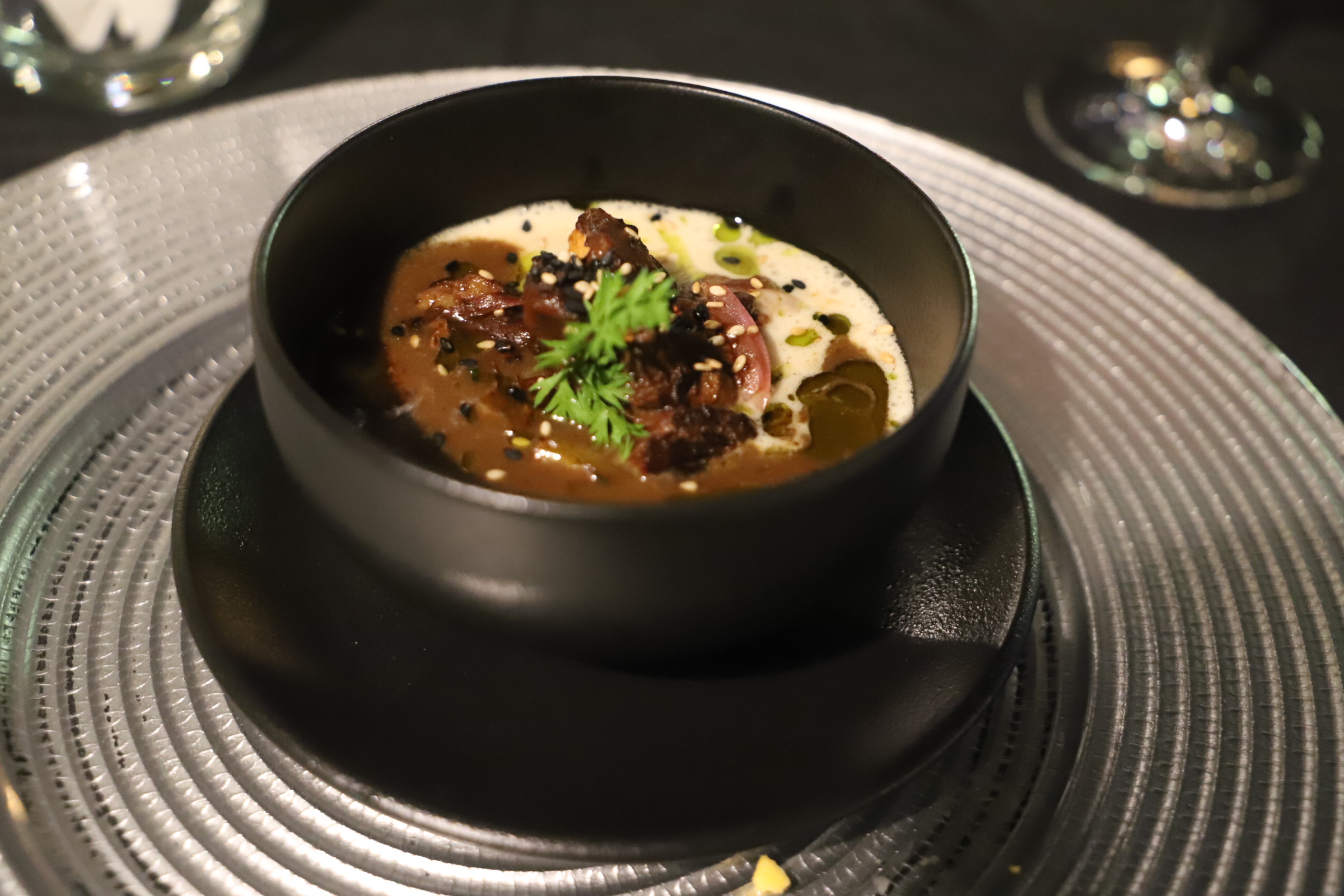
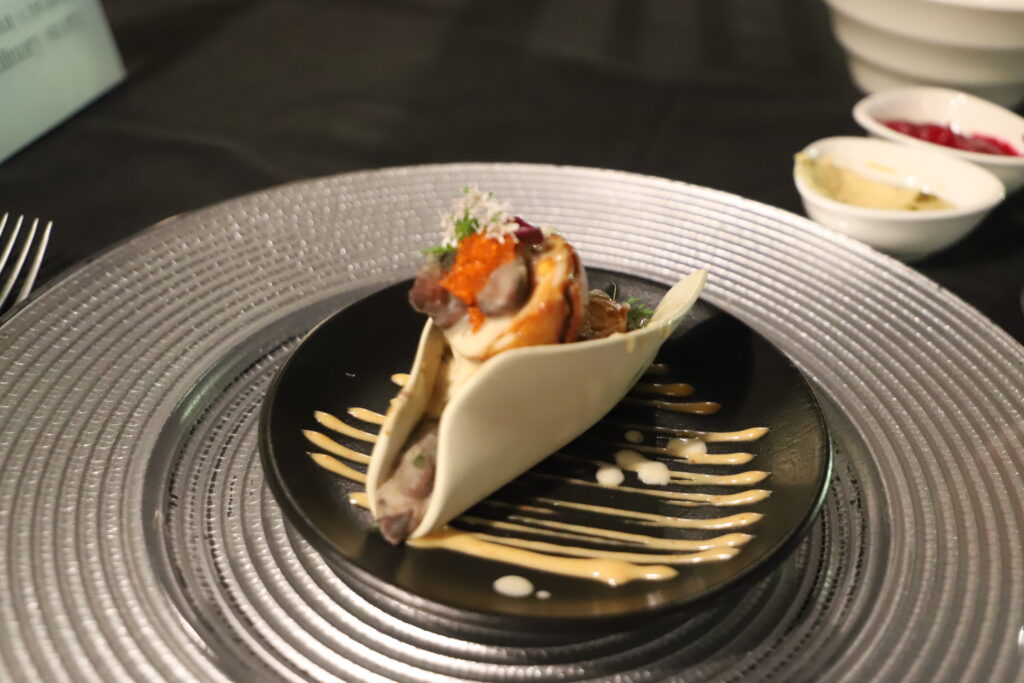
The next plate arrives: his fine-dining interpretation of chamsha.
Inspired by the traditional bone broth soup, the dish features slow-cooked pulled lamb
served with potatoes and Brussels sprouts, finished with a reduced broth sauce, garlic
cream and ginger.
“The idea was to take the flavour and comfort of chamsha and present it in a way that
still feels Kenyan but fits into a fine dining setting,” he says.
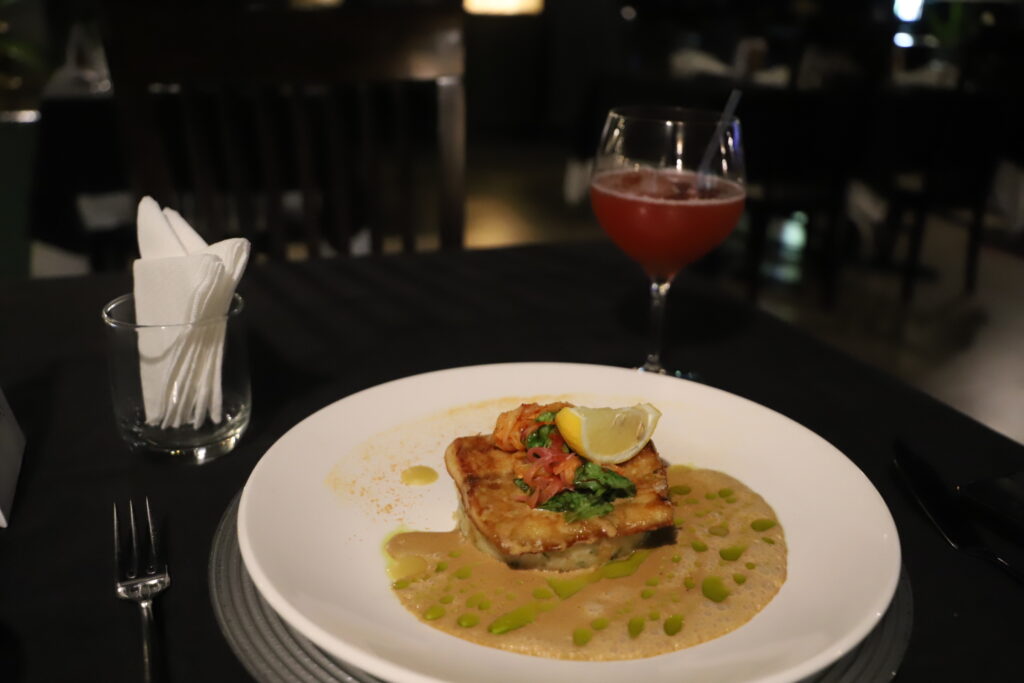
Then comes a health-conscious grilled red snapper served over white beans, fermented
vegetables and coconut-infused sauce.
“We have many guests who want healthy food,” he explains. “So we created something
balanced, flavourful and rooted in local ingredients.”
With the tasting complete, the conversation turns to the philosophy behind the food.
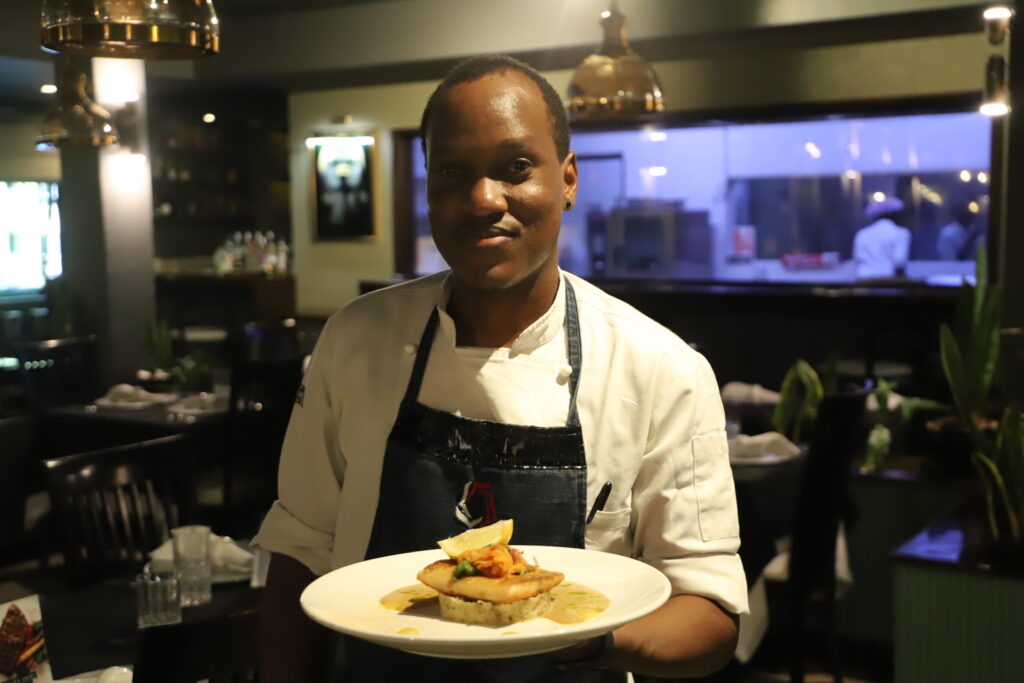
Q: What philosophy guides your cooking?
A: Food is about highlighting the product, not burying it in spices or overpowering
flavours.
Everything on the plate must complement each other. My role is to understand the
original dish, its intention, and then elevate it without destroying its essence.
If you move too far from the source, the Kenyan identity disappears.
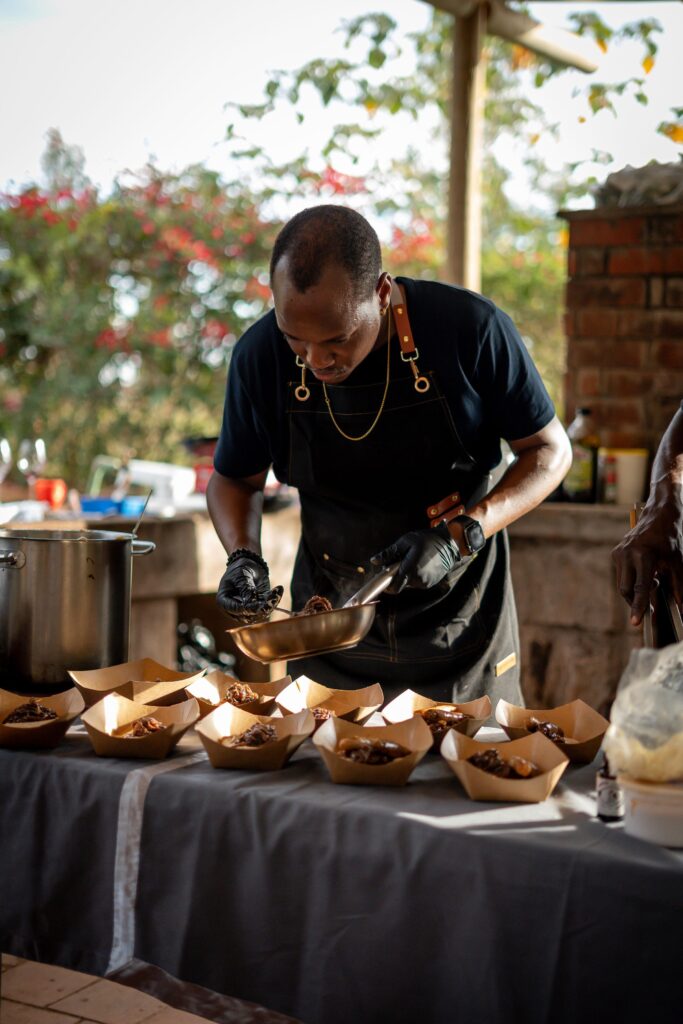
Q: How have Kenyans responded to your reinterpretation of local food?
A: Very positively. I have a supportive client base and people who genuinely love food.
Whenever I present something new, people are curious. Most guests may not have tried
those pairings before, but they appreciate the creativity.
Of course, there are always a few who are hesitant about change, but generally the
response has been encouraging.
Q: Why did you begin doing curated food events?
A: The events are a way of introducing Kenyans to a different food culture — plated
service, storytelling through food, and a more refined culinary experience.
Many events here are buffet-based, not plated fine dining. So I saw an opportunity to
introduce something new.
They also give me creative freedom beyond the restaurant, where guests often want
consistency and repeat favourites. Events allow me to showcase creativity and
experiment.
Q: Where did your culinary journey begin?
A: It started in childhood. My mother used to cook on Sundays and I loved being in the
kitchen with her.
By Form Two I already knew I wanted to cook professionally. My mother encouraged me
to stay focused and pursue culinary school.
After high school I went straight into culinary training.
Q: You trained internationally. How did that shape you?
A: I studied in Switzerland, which gave me strong managerial and business training.
That helped me understand restaurant operations and ownership.
But France is where I truly learned food.
Working in a Michelin-star environment taught me respect for ingredients, sourcing,
plating and understanding the full journey of food from farm to table.
It made me realize cooking is not simply fire and pans — it is a chain of systems and
disciplines that must all be respected.
Q: What made you return to Kenya and start your own restaurant?
A: After working abroad, including in Qatar, I realised I wanted to build something of my
own.
I came home in 2018 with a business plan, presented it to my parents, and they
supported the vision.
We opened this restaurant in July 2018.
Q: How did the restaurant evolve into focusing on African fine dining?
A: Initially we served mostly French cuisine because that was my training.
But around 2021 I realised Nairobi had many restaurants doing similar international
menus. Very few were exploring African fine dining seriously.
That’s when I shifted toward storytelling through African ingredients and dishes — using
food to narrate memory, heritage and culture.
Q: Can African food truly be fine dining?
A: Absolutely.
People still carry colonial perceptions that African food cannot be refined. But fine dining
is simply about elevation — how you treat the ingredient, how you present it, and how
you enhance flavour and texture.
Take githeri for example. You can soften the maize, use butter beans for more flavour,
add fresh herbs or pomegranate, refine the texture and plate it elegantly.
Or take kienyeji chicken — you can slow-cook it, shred it, fold it into dumplings and use
the broth as a sauce.
That is fine dining: elevation without losing identity.
Q: How do you innovate without erasing tradition?
A: The goal is never to remove culture. It is to preserve the identity while changing the
presentation.
We do not rename dishes unnecessarily or pretend they are something else.
For instance, we created ugali croquettes — ugali balls stuffed with minced meat and
sukuma, then fried using a French croquette technique. But it is still clearly ugali.
We add value rather than erase heritage.